Why Your Medications Could Be Delayed and How to Stay Prepared
Throughout the year, across the NHS, pharmacies and prescribers work hard to make sure you can get the medications you need. Most of the time this goes off
without a hitch, and we can expect medications to be delivered with the next delivery. But occasionally, supply problems can mean that certain medications are not as easily available as we would like. And they may be in short supply.
These shortages can be stressful and are often inconvenient for both
the pharmacy and, particularly,
the patient. However, there are good reasons why these shortages or supply issues occur. And ways that we are all working together to manage them to the best of our ability.
What Causes Medication Shortages?
Medication supply chains can be complex. Involving not just a manufacturer and consumer but a long chain of suppliers across the globe. At each step of this process, unfortunate delays can occur. These may include shortages of raw ingredients needed to make medicines, sudden
spikes in demand for certain treatments, issues with
manufacturing capacity, or
global events. Even though most medications supplied in the UK are usually available, the occasional disruption is still possible. No matter how popular or plentiful the medication may be.
When manufacturers are running low on a medication or struggling to meet demand, they should
inform the government. This is so that steps can be taken to minimise the impact on patients. By working with
the NHS, boards across the UK are made aware of these shortages in order to develop plans to reduce their impacts.
What Might You Be Asked to Do?
Not all shortages are alike. There are a few things you may be asked to do when a shortage occurs with your prescription items:
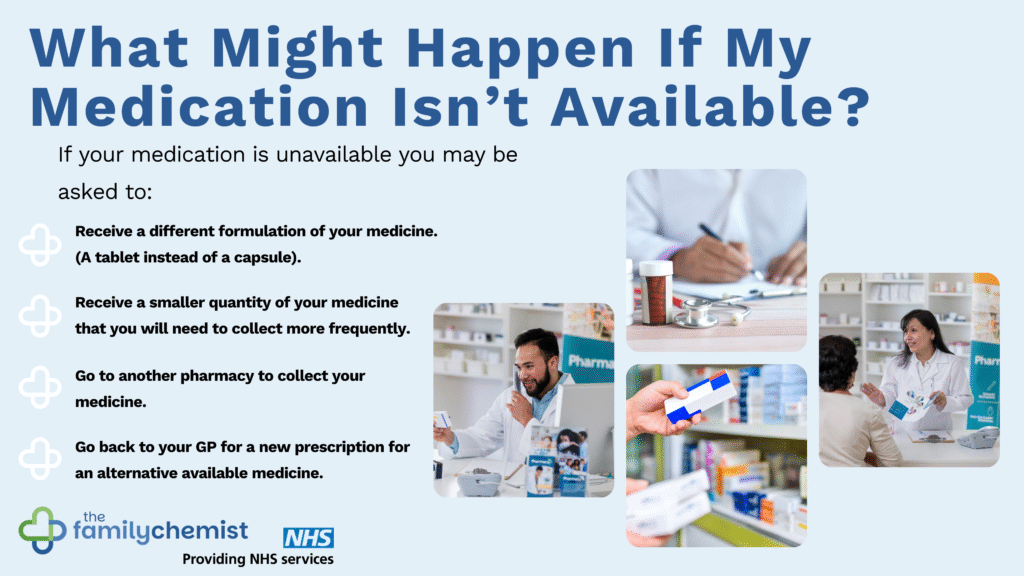
It is not unusual to be asked to try another pharmacy when your medication is unavailable. Not all medication shortages are nationwide. Each pharmacy may use different suppliers, even compared with one located nearby. So, while your regular pharmacy may not currently be able to obtain your medication, another pharmacy could still have a supply.
Often suppliers or manufacturers place
quotas on certain items to limit the quantity that a pharmacy can order within a set period, usually a month. This happens for products high in demand. If one pharmacy has several patients requiring the same limited medication, it may reach its quota quickly. Meanwhile, a nearby pharmacy with fewer patients on that medication may not reach its quota at all.
What Can You Do?
If your medication is not available straight away, there are a few recommended ways to help manage the shortage:
- Talk to your pharmacist or GP early so they can offer help and advice sooner rather than later.
- Order your repeat prescriptions in good time before your current supply runs out, giving your pharmacy longer to source your medicines. If you have had a shortage with your medication in the past, then add a few more days in case of delays.
- Avoid stockpiling extra. Ordering more than you need can cause shortages or make them worse for other patients.
The Bottom Line
We know that these shortages can be frustrating and are far from ideal. We also understand that it can be worrying when medication is not as readily available as expected. NHS teams,
including ours, are doing everything possible behind the scenes to reduce disruption and can often resolve issues without causing delays. However, from time to time, we may need your help to work with us and make the process easier for everyone.