




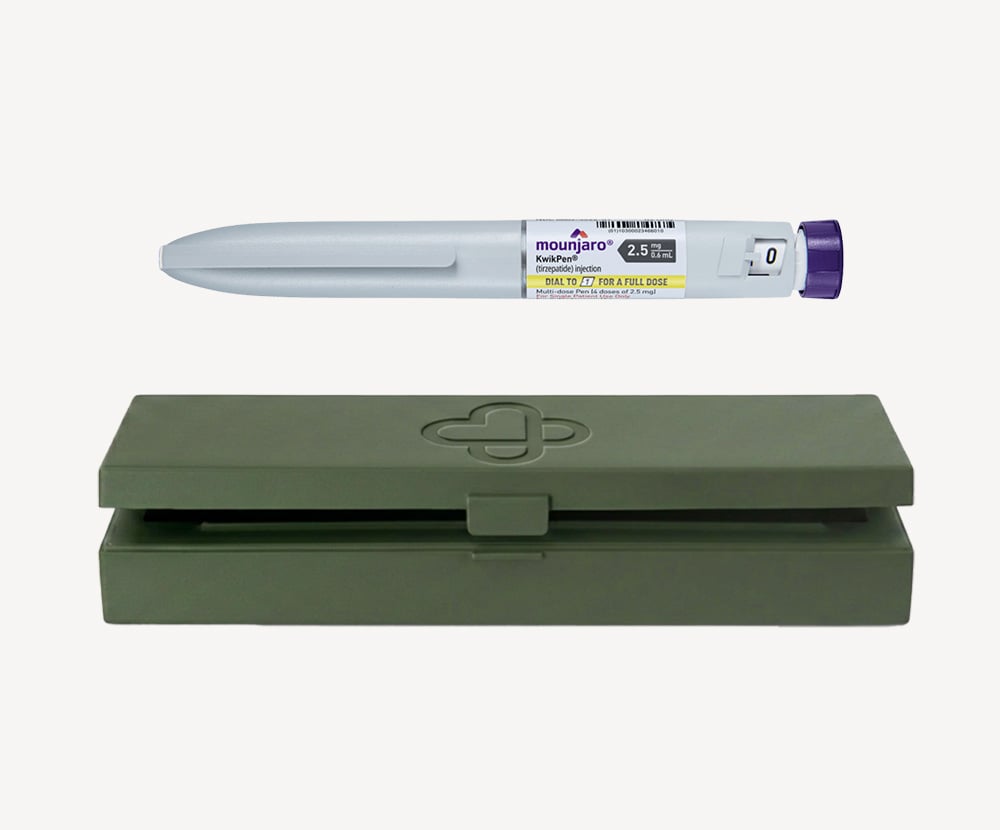

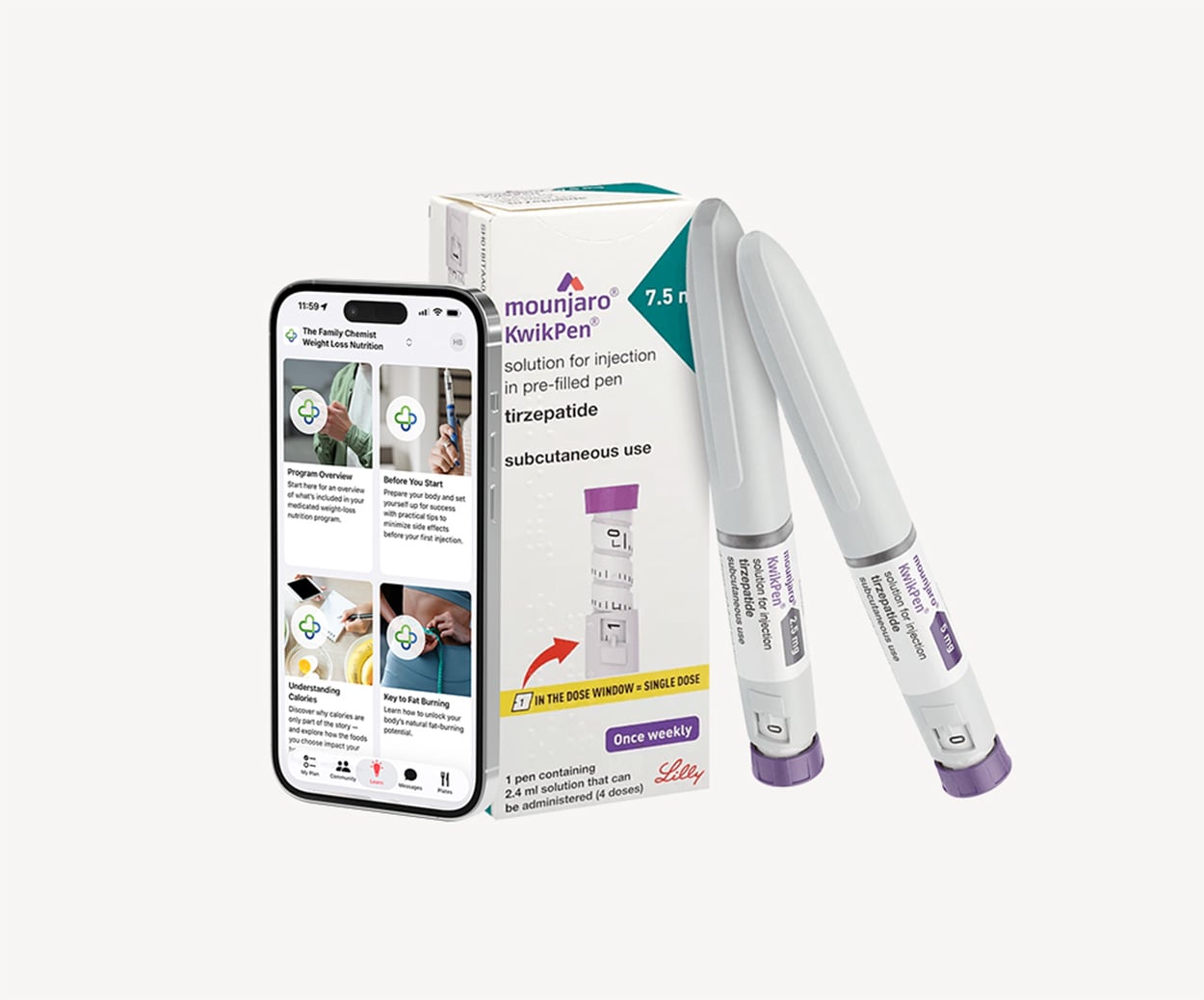
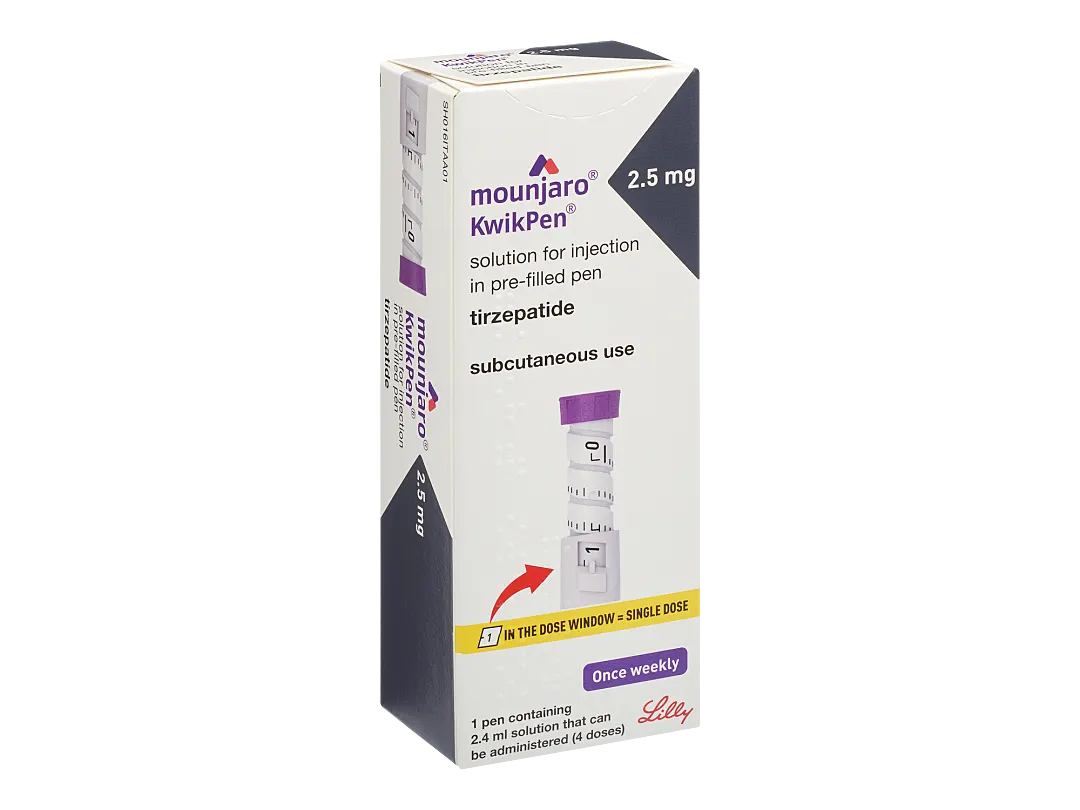
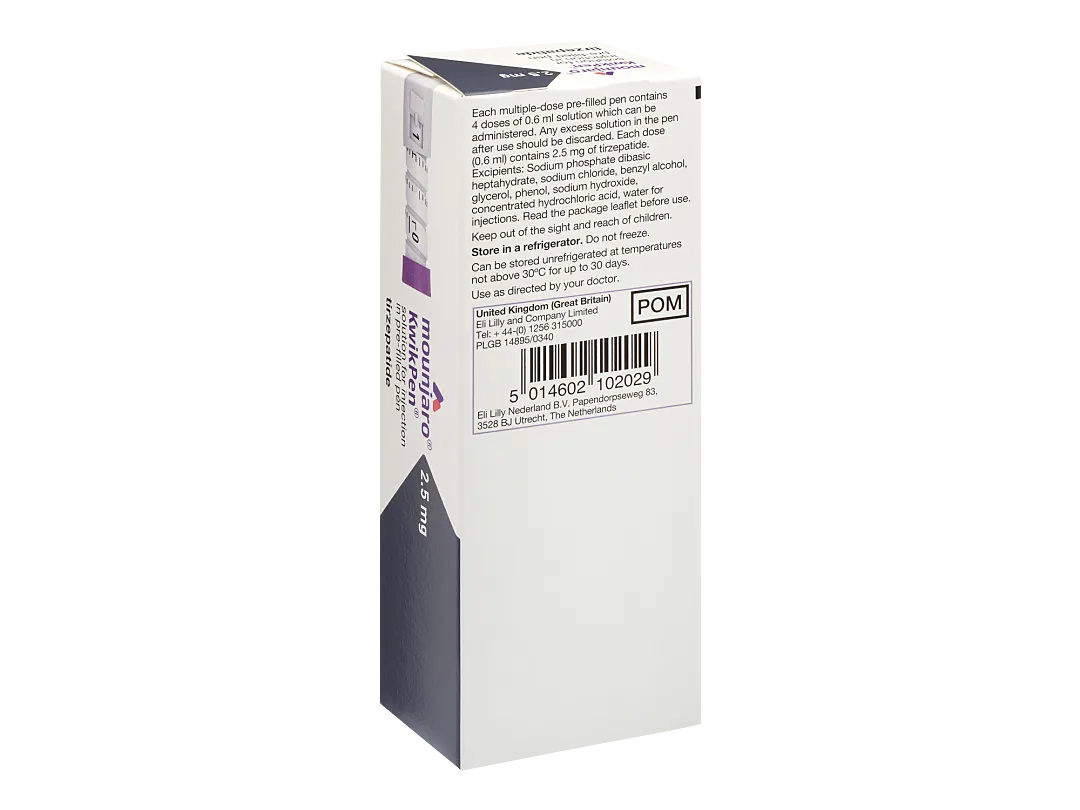
Mounjaro
- ✓
Lose up to 22% of your starting weight - ✓
Mimics GLP-1 and GIP, to reduce appetite and cravings - ✓
Free clinical support throughout your treatment - ✓
Weight management may be suitable for patients with a BMI of 25 or more
- Free Delivery
- Clinical Reviews
- Easy to Manage
- Track your Savings
Mounjaro Price
The cost of Mounjaro depends on your dose. We check our prices against other pharmacies regularly, so you get the best value for money when you buy Mounjaro online with us. Here’s what you’ll pay per month at each dose.
| Mounjaro Dosage | Monthly plan | Subscribe & Save |
|---|---|---|
| 2.5mg |
£164.99
£124.99
|
£144.99/renewal
£124.99 first order
|
| 5mg |
£178.99
£138.99
|
£158.99/renewal
£138.99 first order
|
| 7.5mg |
£234.99
£194.99
|
£214.99/renewal
£194.99 first order
|
| 10mg |
£258.99
£218.99
|
£238.99/renewal
£218.99 first order
|
| 12.5mg |
£278.99
£238.99
|
£258.99/renewal
£238.99 first order
|
| 15mg |
£293.99
£253.99
|
£273.99/renewal
£253.99 first order
|
| 2.5mg Starter Pack- Needles, Swabs & Sharpsbin |
£174.99
£134.99
|
— |
| 2.5mg & 5mg Starter Pack |
£344.99
£304.99
|
— |
| 2.5mg & 5mg & 7.5mg Starter Pack |
£579.99
£539.99
|
— |
Save £20 every month
Subscribe & Save on popular treatments
Never miss your next dose. Your treatment can be prepared automatically every month, with a quick check-in before each order.
Subscribe & Save
Best Value
- Auto-renews every 4 weeks
- Quick monthly check-in
- Choose to stay on the same dose, increase, decrease, or pause
- Cancel anytime
One-time purchase
Best Value
- Single order only
- No ongoing savings
- Reorder manually each month
Subscribe & Save
Best Value
- Auto-renews every 4 weeks
- Quick monthly check-in
- Choose to stay on the same dose, increase, decrease, or pause
- Cancel anytime
One-time purchase
Best Value
- Single order only
- No ongoing savings
- Reorder manually each month
What is Mounjaro?
Mounjaro is a once-weekly injection that supports weight loss and long-term weight management. It reduces food cravings and appetite so you feel fuller for longer.
In Clinical trials adults taking the highest dose alongside diet and exercise lost up to ~22% of their bodyweight over 72 weeks.
The active ingredient is Tirzepatide. It mimics the action of two hormones, GLP-1 and GIP, that act on the areas of the brain involved in regulating appetite.
Mounjaro is available on prescription only in the UK, through licensed providers such as The Family Chemist.
Your journey
starts here
More than medication. Our pharmacists provide expert support designed to help you succeed.
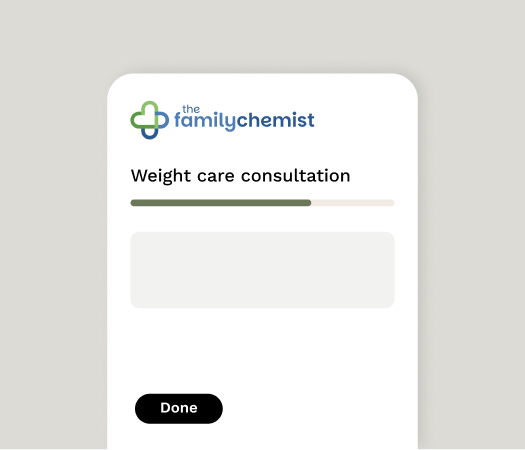
Start Free Consultation
Complete a quick, free online questionnaire.
Clinician Review
After you choose your preferred treatment, our clinicians will review your consultation.
Delivered to your door
Your medication is approved and delivered quickly in discreet packaging.

Access your coaching
Activate your access code in the Nutrable app to access personalised nutrition guidance and coaching features.
“Every consultation is reviewed carefully to ensure treatment is safe, appropriate, and tailored to the individual. Patient wellbeing is always our priority.”

Sunny Dhain – Clinical Director | MRPharmS | PGDip | GPhC registered pharmacist
How do Mounjaro injections work?
Mounjaro targets two receptors in your body: GIP and GLP-1. Both help control appetite, blood sugar and how your body uses energy.
The GLP-1 receptor lowers your appetite and helps manage blood sugar. The GIP receptor plays a part in energy balance and how fat is stored and used.
Because Mounjaro activates both together, it can lead to more weight loss than treatments that only work on GLP-1. In practice, that means less hunger and better control over portion sizes. You can read more in our guide to the health benefits of Mounjaro.
How effective is Mounjaro?
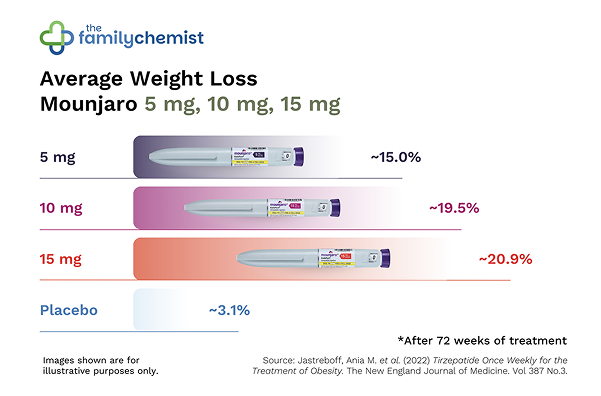
- 5mg injection – 15.0% average weight lost
- 10mg injection – 19.5% average weight lost
- 15mg injection – 20.9% average weight lost
- Placebo saw a 3.1% average of weight lost.
Who can take Mounjaro?
Mounjaro is for adults who meet specific clinical criteria and can use it safely under medical supervision. You may be eligible if you:
Have a BMI of 25 kg/m² or above
Have a BMI of 27–30 kg/m² with a weight-related condition such as high blood pressure, high cholesterol, pre-diabetes, or heart disease
Are from an ethnic background, where lower BMI thresholds may apply (typically from 27.5 kg/m²) due to higher metabolic risk
Are transferring from another provider and want to continue treatment with us
Your eligibility also depends on your weight, health conditions, medication and medical history.
The easiest way to find out is to complete an online consultation, it only takes a few minutes.
Can you get Mounjaro on the NHS?
Yes, but access is limited. Not every GP practice prescribes it, because availability depends on local NHS services and the eligibility criteria are strict.
The rollout is happening in phases over several years, with priority given to patients with the highest medical need.
To qualify in the early stages, you’ll usually need a BMI of 40 or above, plus at least four of the following:
- High blood pressure
- High cholesterol or abnormal blood fats
- Obstructive sleep apnoea
- Heart or cardiovascular disease
- Type 2 diabetes
A lot of people won’t qualify on the NHS yet. That’s why some choose to buy Mounjaro privately if they’d rather start sooner.
Has Mounjaro been clinically tested?
Yes. The SURMOUNT-1 trial is the main evidence for how well Mounjaro works. In the trial, adults with obesity (or who were overweight but did not have diabetes) lost a significant amount of weight when they took tirzepatide alongside diet and lifestyle changes.
The trial also helped confirm its safety profile. Mounjaro isn’t suitable for everyone, though, so it should only be used after a clinical assessment.
How long does Mounjaro take to work?
Most patients using Mounjaro weight loss injections notice early changes within the first 2 to 4 weeks, with more substantial results developing over 8 to 12 weeks as the dose is increased.
Average weight loss on different Mounjaro doses
Key points about Mounjaro weight loss injection results:
Early on (2–4 weeks): your appetite drops and portion control improves.
Progressive weight loss (8–12 weeks): you’ll usually see visible weight loss as the dose is increased safely.
Maximum results (up to 72 weeks): clinical studies show up to 22% body weight loss on the highest dose, alongside lifestyle changes.
Dose escalation matters: Gradual increases help minimise side effects and improve long-term results.
Best outcomes: come when you combine Mounjaro injections with a balanced diet and at least 150 minutes of activity a week.
Additional benefits: improvements in waist size, blood pressure, cholesterol and insulin sensitivity.
How do I use Mounjaro weight loss injections?
Mounjaro comes as a pre-filled pen in six strengths: 2.5mg, 5 mg, 7.5 mg, 10 mg, 12.5 mg, and 15 mg. You use it once a week, and it’s designed to be simple to use. Always read the package leaflet that comes with your pen before you start.
- To begin: start on 2.5mg once a week for the first four weeks.
- Titration: increase in 2.5mg steps every four weeks as advised, up to a maintenance dose that suits you.
Concerned about giving yourself an injection?
“Many patients feel anxious about the idea of self-injecting at first. However, Mounjaro is designed to make the process as straightforward and comfortable as possible. It is supplied in a pre-filled pen device rather than a traditional syringe, making administration simple and controlled. The needle used is very fine and significantly smaller than those typically used for routine injections, and the pen mechanism delivers the dose, without the need for manual pressure.”
– Sunny Dhain MPharm, PGDip Independent Prescriber, Clinical Director
How to inject
We have a step-by-step guide for using the Mounjaro pen. Here are the basics
- Timing: once a week, ideally the same day and time so your levels stay steady.
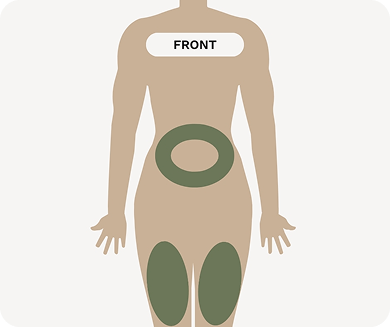
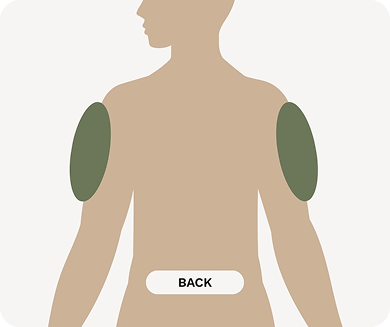
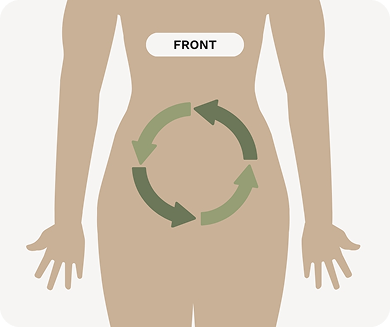
- Where: your stomach, upper thighs, or the outer part of your upper arms. Avoid veins and muscle, and change the spot each week to reduce irritation.
- Before you inject: use a new pen needle every time. Check the pen and needle for damage, and that the liquid is clear and colourless to slightly yellow.
- After: put each used needle in a sharps bin.
Troubleshooting a Mounjaro Pen
Eli Lilly publishes troubleshooting guidance for the KwikPen. These are the three things patients ask us about most:
- Air bubbles are normal and don’t affect your dose.
- Room temperature isn’t needed. You don’t need to warm the pen first.
- A drop of liquid or blood after injecting is normal. Press gently with cotton wool or gauze, and don’t rub.
Monitoring and Adjustments
- Monitor your body’s response to Mounjaro. Adjustments to the dosage may be necessary based on effectiveness and side effects.
- If adding Mounjaro to other diabetes medications like sulphonylureas or insulin, monitoring and dose adjustments may be needed to reduce the risk of hypoglycemia.
What are the alternatives to Mounjaro?
Weight Loss Treatment Comparison
Several alternatives to Mounjaro are available for weight management, each using different active ingredients and mechanisms to support weight loss. The options below are commonly prescribed in the UK:
To explore weight-loss treatments, visit our weight loss injections page and begin your medically supervised weight-management journey with guidance from our prescribing team.
| Mounjaro | Wegovy | Liraglutide | Wegovy Tablets | Xenical | Orlistat | Alli | Mysimba | |
| Category | Injection | Injection | Injection | Tablet | Tablet | Tablet | Tablet | Tablet |
| Active Ingredient(s) | Tirzepatide | Semaglutide | Liraglutide | Semaglutide | Orlistat | Orlistat | Orlistat | Bupropion and Naltrexone hydrochloride |
| Mode of Action | GLP-1 receptor agonist and GIP mimetic | GLP-1 receptor agonist | GLP-1 receptor agonist | GLP-1 receptor agonist | Lipase inhibitor | Lipase inhibitor | Lipase inhibitor | Multimodal action |
| Administration | Once weekly | Once weekly | Once daily | Once daily | With meals | With meals | With meals | With meals |
| Dosage | Starting at 2.5mg, up to 15mg | Starting at 0.25mg up to 7.2mg | Starting at 0.6mg up to 3mg | Starting at 1.5mg up to 25mg | One up to three times a day | One up to three times a day | 60mg up to three times a day | One to four tablets a day |
| Weight Loss % | Up to 21% to 22% | About 21% | About 5% to 10% | About 14% to 20% | About 5% to 10% | About 5% to 10% | About 5% | About 5% to 10% |
| Common Side Effects | Nausea, indigestion, diarrhoea, vomiting, constipation, stomach pain | Nausea, indigestion, diarrhoea, vomiting, constipation, stomach pain | Nausea, hypoglycaemia, diarrhoea, constipation, headache, decreased appetite | Nausea, indigestion, diarrhoea, vomiting, constipation, stomach pain | Oily spotting, gas with discharge, faecal urgency, fatty/oily stool | Similar to Xenical: Oily spotting, gas, faecal urgency | Similar to Xenical but may be milder due to lower dose | Nausea, constipation, headache, dry mouth, dizziness |
| Manufacturer | Eli Lilly | Novo Nordisk | Generic | Novo Nordisk | Cheplapharm Arzneimittel GmbH | Generic | Not specified | Not specified |
Who cannot use Mounjaro?
Mounjaro isn’t right for everyone. You cannot use it if you:
- Are pregnant, planning a pregnancy, or breastfeeding
- Are over 85 years old
- Have a severe stomach or gut condition, such as severe gastroparesis
- Have certain types of diabetic retinopathy
- Have been diagnosed with acute pancreatitis
Use Mounjaro with caution if you:
Have a history of pancreatitis
Mounjaro has not been widely studied in patients with previous pancreatitis. Stop treatment immediately and seek medical help if you develop severe stomach pain, nausea, or vomiting.
Take diabetes medication
Using Mounjaro alongside diabetes medication such as insulin or sulphonylurea medicines can increase the risk of low blood sugar (hypoglycaemia). Your prescriber may need to adjust your dose and monitor you closely.
Experience severe gastrointestinal side effects
Common side effects such as nausea, vomiting, or diarrhoea can lead to dehydration, which may affect kidney function — particularly in older adults. Staying well hydrated is important.
Take other oral medications
Mounjaro can slow stomach emptying and affect how some oral medicines are absorbed, especially medicines where the dose needs to be very precise to work safely. Your prescriber may review your medication regimen.
Mounjaro side effects
What are the most common side effects of Mounjaro?
Like all medicines, Mounjaro can cause side effects. Most are mild and tend to ease off in the first few weeks as your body gets used to it.
For practical ways to handle them, see our guide on Mounjaro side effects and how to overcome them.
The most common side effects are:
- Nausea
- Diarrhoea
- Vomiting
- Constipation
- Low blood sugar (mainly when taken with certain diabetes medications)
Can Mounjaro Cause Low Blood Sugar?
Yes, especially if you take it alongside diabetes medications like insulin.
Signs include shaking, sweating, dizziness, hunger and a fast heartbeat. Tell your prescriber if you notice these.
Other common side effects
- Faster pulse
- Allergic skin reactions such as rash, itching or eczema
- Stomach pain
- Indigestion
- Bloating
- Burping or wind
- Heartburn or acid reflux
- Feeling tired
- Low blood pressure
- Hair loss
- Irritation, itching or redness where the injection was taken
- Changes in blood test results – increased pancreatic enzymes
Uncommon side effects
This isn’t a full list. Always read the patient information leaflet, and report any side effects through the MHRA Yellow Card scheme.
What are the long-term side effects of Mounjaro?
What should I do if I experience serious side effects from Mounjaro?
- Pancreatitis
- Allergic reactions
- Gallbladder problems
If you experience any symptoms of these such as breathing difficulties, swelling of the throat, face, and mouth, fainting, severe stomach and back pain, then stop taking Mounjaro and seek medical help immediately.
This is not a full list of possible side effects. Always read the patient information leaflet before using Mounjaro so you understand the possible side effects, warnings and precautions and if you experience side effects not listed above, complete a MHRA Yellow Card Report.
Mounjaro vs Wegovy
Mounjaro and Wegovy are both weekly weight loss injections that lower your appetite and help with long-term weight loss. The main difference is the active ingredient and how it works.
Mounjaro contains Tirzepatide, which works on two hormones (GLP-1 and GIP). Wegovy contains semaglutide, which works on GLP-1 only. Both are effective.
The right choice comes down to your goals and how well you get on with the treatment. Our clinicians will help you decide, and you can read a fuller comparison in Mounjaro vs Wegovy: the verdict.
Wondering about alcohol while you’re on treatment? Our guide on drinking on Mounjaro and Wegovy covers it.
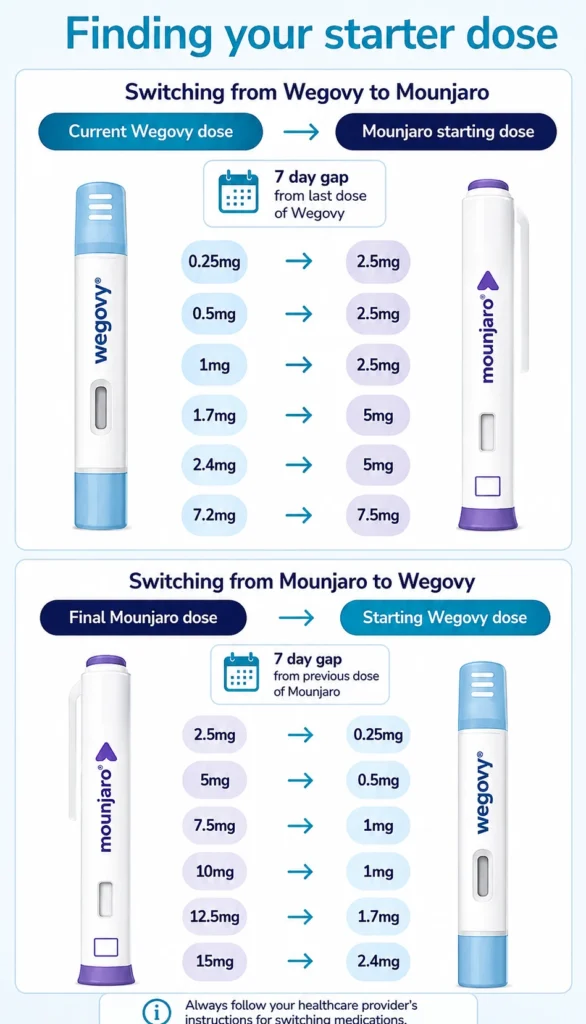
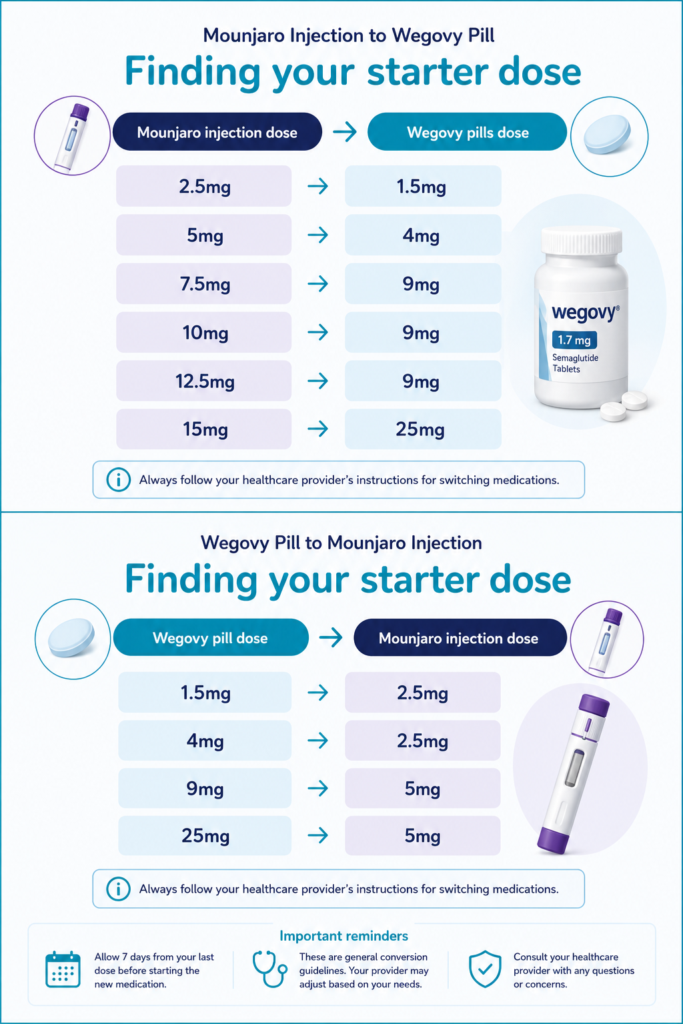
Can I switch between Mounjaro, Wegovy and Wegovy Tablets.
Yes, you can switch, and our clinicians will tell you the right equivalent dose. Because Mounjaro and Wegovy work slightly differently, it isn’t a like-for-like swap.
The correct starting dose depends on what you’re taking now. The same goes for switching to or from Wegovy tablets. Complete a consultation and our team will plan a safe switch for you.
Does Mounjaro affect the contraceptive pill or HRT?
Mounjaro can affect how well some oral medications are absorbed, because it slows down how quickly your stomach empties.
This includes the contraceptive pill and oral HRT. There’s more detail in our guide on how weight loss injections can affect contraception.
Oral contraceptive pills: Mounjaro may make them less effective, especially when you first start and after each dose increase. Use a barrier method like condoms for 4 weeks after starting and for 4 weeks after each dose increase, or consider a non-oral method.
Oral HRT: Mounjaro may also affect how it’s absorbed. Tell your GP or HRT prescriber that you’re starting Mounjaro, so they can advise on monitoring or alternatives. Get medical advice if menopausal symptoms come back or you notice new breakthrough bleeding.
These things matter most in the first 4 weeks after you start, and after each dose increase.
When is the best time to take Mounjaro?
You can take Mounjaro at any time of day, with or without food. Same day each week is the only rule. Pick one that fits your routine and set a phone reminder.
Can you change your Mounjaro injection day?
Yes you can, leave at least 3 days or 72 hours between doses. Once you’ve chosen your new injection day, continue taking Mounjaro on that day, once a week.
Try not to change your injection day too often as this can affect how effective the treatment is. Sticking to a regular weekly routine helps the Mounjaro pen deliver consistent results and help you stay on track with your weight loss goals.
What if you miss a dose?
If you miss a dose, take it as soon as you remember if you’re within four days. If it’s been more than four days, skip it and go back to your usual schedule. Never take two doses to catch up. If you’ve missed several doses, speak to our clinicians, as you may need to restart on a lower dose.
How long do I have to stay on Mounjaro injections?
How long you use Mounjaro injections depends on your weight loss goals, how well the treatment works for you, the side effects you experience and your long-term plan to maintain your new weight.
Some patients may need to stay on Mounjaro for longer to help maintain their results. Research from the SURMOUNT-4 trial found that people who stayed on the Mounjaro weight loss injection were more likely to preserve their results and continue losing weight, while those who stopped treatment were more prone to weight regain.
Our clinicians will monitor your progress and make dose adjustments where needed.
What happens when you stop taking Mounjaro?
When you stop taking Mounjaro, your appetite can come back and you may regain some weight. It doesn’t happen the same way for everyone, though.
Research from the SURMOUNT-4 trial found that people who stopped treatment were more likely to regain weight than those who carried on. In a later look at the data, 82.5% of people who stopped regained at least 25% of the weight they’d lost within a year, and around 1 in 4 regained 75% or more.
Even so, many people keep their results by sticking with the habits they’ve built: balanced meals, sensible portions and regular activity. The takeaway is that long-term weight management matters, whether you stay on treatment or not.
Our guide on stopping Mounjaro safely explains how to do it well, and our clinicians can help you decide when and how to stop.
Do you gain weight back after stopping Mounjaro?
Not always, some people may regain weight after stopping Mounjaro injections but this does not happen in the same way for everyone.
The SURMOUNT-4 data shows that those who stopped treatment are more likely to regain some weight. However some people maintained their new weight through lifestyle changes, including calorie control and regular physical activity.
Mounjaro can help support weight loss, but keeping the weight off in the long-term usually depends on maintaining lifestyle changes after treatment stops.
Mounjaro doses
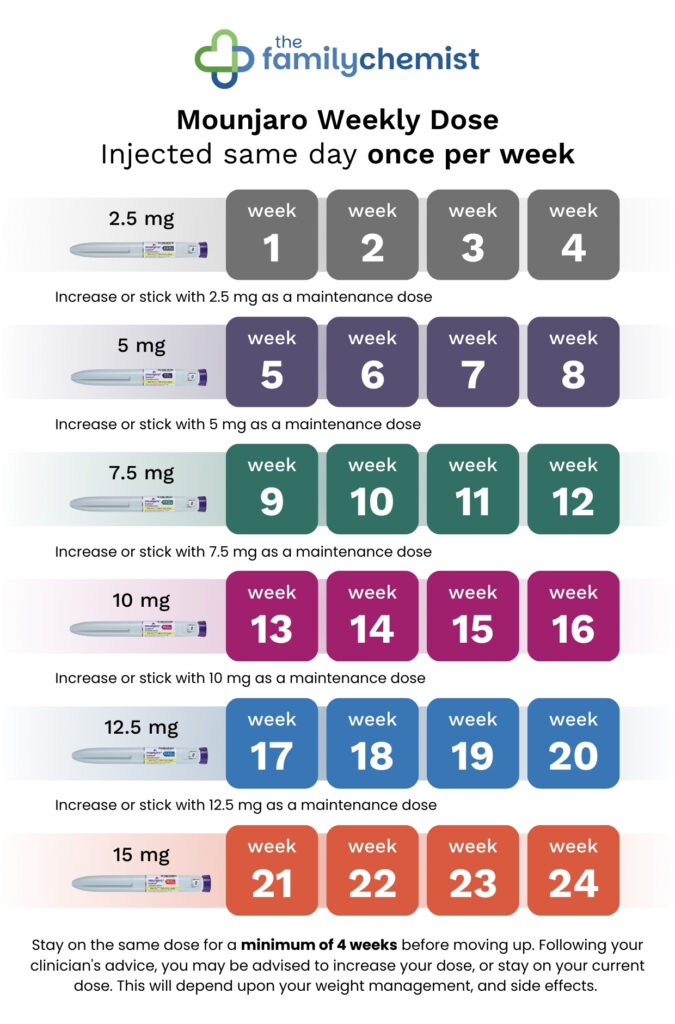
Mounjaro weight loss injections are available in six dose strengths. Treatment always starts from the lowest dose and gradually increases, giving your body time to adjust and reduce the chance of side effects, while supporting safe and effective weight loss.
The available Mounjaro dose strengths are:
2.5mg
5mg
7.5mg
10mg
12.5mg
15mg
What is the Mounjaro maintenance dose?
Mounjaro always starts low and builds up slowly. This gives your body time to adjust and helps keep side effects down. There are six strengths: 2.5mg, 5mg, 7.5mg, 10mg, 12.5mg and 15mg.
You’ll usually start on 2.5mg once a week for the first four weeks. After that, our clinician may move you up to 5mg, then by 2.5mg at a time if you’re tolerating it well. You’ll stay on each dose for at least four weeks before going up. The highest approved adult dose is 15mg once a week.
You don’t have to reach the top dose. The maintenance dose is the one you stay on long term to keep the weight off, and it’s usually 5mg, 10mg or 15mg.
The right one depends on your progress, your side effects and how well you get on with the treatment. Plenty of people get steady results on a lower or middle dose and prefer to stay there.
If you’re weighing this up, our guide on whether to stick to your dose or move up may help, and you can read more about maintenance therapy too. Our clinicians will help you find what works for you.
How to buy Mounjaro online in the UK
Buying Mounjaro online with us takes four steps, and our pharmacists are here to help at each one.
- Start your free consultation. Fill in a quick online questionnaire about your health, weight, medications and goals.
- Clinician review. Once you’ve chosen your treatment, our clinicians review your answers to make sure Mounjaro is safe and suitable for you.
- Delivered to your door. If your treatment is approved, we send it out quickly in discreet packaging.
- Access your coaching. Activate your code in the Nutrable app for personalised nutrition guidance and coaching.
Where should you buy Mounjaro?
Only buy Mounjaro from a regulated UK pharmacy or an approved healthcare provider. When you buy Mounjaro online with The Family Chemist, a qualified clinician reviews your consultation. If your treatment is approved, you get clear guidance and ongoing support for as long as you’re with us.
You also get a free support programme built by our in-house nutritionists and clinicians. It includes practical advice on eating well, staying active and building habits that last, plus trackers and goal-setting tools. And if you have questions during treatment, our clinical team is always here to help.
Getting started is simple:
- Complete a short online medical questionnaire
- Our prescribers review your information to check treatment is suitable
- Get your personalised next steps and free support package
- Order your treatment securely online
Start your weight-loss journey with confidence
Starting treatment with The Family Chemist is simple, secure and guided by our clinical team.
Complete a short online medical questionnaire
Our prescribers review your information to check if treatment is suitable
Receive personalised next steps and access to your free support package
Request your treatment securely online
Take the first step towards a healthier weight with expert support from The Family Chemist. Start your consultation now.
Sources
- Tirzepatide once weekly for the treatment of obesity in people with type 2 diabetes (SURMOUNT-2): a double-blind, randomised, multicentre, placebo-controlled, phase 3 trial (2023) The Lancet [accessed 9th February 2026]
- Tirzepatide Once Weekly for the Treatment of Obesity (2022) The New England Journal of Medicine [accessed 9th February 2026]
- Mounjaro 2.5/5/7.5/10/12.5/15mg KwikPen solution for injection in pre-filled pen (2024) EMC: Patient Information Leaflet [accessed 9th February 2026]
- Wegovy 0.25 mg, FlexTouch solution for injection in pre-filled pen, emc [accessed 9th February 2026]
- A Study of Tirzepatide (LY3298176) in Participants With Type 2 Diabetes Who Have Obesity or Are Overweight (SURMOUNT-2) (2024) Clinical Trials [accessed 9th February 2026]
- A Study of Tirzepatide (LY3298176) In Participants After A Lifestyle Weight Loss Program (SURMOUNT-3) (2024) Clinical Trials [accessed 9th February 2026]
- Continued Treatment With Tirzepatide for Maintenance of Weight Reduction in Adults With Obesity (2024) JAMA [accessed 9th February 2026]
- Mounjaro is the first in a new class for the treatment of type 2. Diabetes (2023) Mounjaro [accessed 9th February 2026]
- How to use Mounjaro (2023) Mounjaro [accessed 9th February 2026]
- MHRA authorised diabetes drug Mounjaro (tirzepatide) for weight management and weight loss (2023) GOV.UK. [accessed 9th February 2026]
- Effectiveness of Dulaglutide in the Real World and in Special Populations of Type 2 Diabetic Patients (2020) NIH [accessed 9th February 2026]
- Lilly’s SURMOUNT-2 results published in The Lancet show tirzepatide achieve a mean weight reduction of 15.7% at the highest dose (15mg) in adults with obesity or overweight and type 2 diabetes (2023) Eli Lilly [accessed 9th February 2026]
- Tirzepatide for managing overweight and obesity (2024) NICE [accessed 9th February 2026]
- Two-year effects of semaglutide in adults with overweight or obesity: the STEP 5 trial (2022) Nature Medicine [accessed 9th February 2026]
- Once-Weekly Semaglutide in Adults with Overweight or Obesity, The New England Journal of Medicine [accessed 9th February 2026]
Medically
reviewed by
Sunny Dhain (MPharm, PGDip, IP, MRCPharm)
GPhC Number: 2073665

Last reviewed: 18th August 2026
Meet our
medical professionals



Aaliyah Nelson
Nutritional Coaching
BSc (Hons) Nutrition: 47988
Standards first
always