




















Your Cart

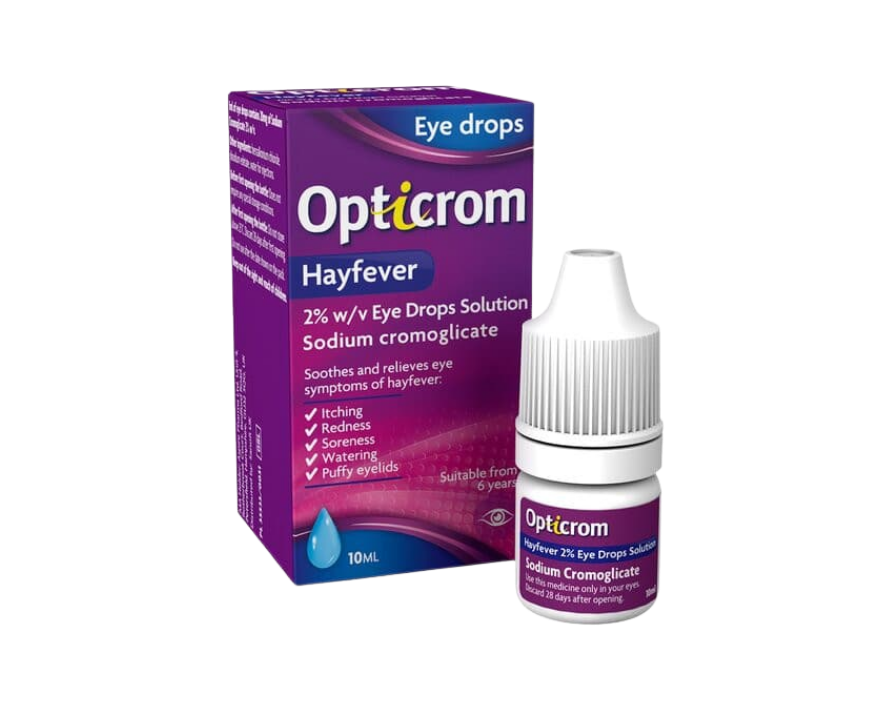
Opticrom 2% Eye Drops

Opticrom Eye Drops contain an active ingredient called sodium cromoglicate 2%. This is part of a group of medicines called anti-allergics. They treat allergic conjunctivitis, a condition triggered by hay fever, house mites and other allergies. The allergens can irritate eyes, making them red, watery, itchy, and puffy.


Opticrom eye drops should be used by applying one or two drops into each eye four times a day.

Price
1 x 10ml £5.49
2 x 10ml £9.50
3 x 10ml £15.50
NOTE: Packaging may differ from picture.
Continue to consultation

You can select from the quantities after filling out the short online consultation.

delivery icon

Same day dispatch if ordered before 2pm

discreet icon

Discreet and plain packaging

message icon

Free expert support & advice

shield with tick small icon

GPhC Registered

small home icon

Free Delivery (Orders Over £20)

lock icon

Confidential & Discreet

FAQ Icon

FAQs

Opticrom Eye Drops contain an active ingredient called sodium cromoglicate 2%. This is part of a group of medicines called anti-allergics. They treat allergic conjunctivitis, a condition triggered by hay fever, house mites and other allergies. The allergens can irritate eyes, making them red, watery, itchy, and puffy.

Sodium cromoglicate works by stopping the release of natural substances in your eyes that lead to an allergic reaction. They also reduce the severity of the symptoms if you encounter an allergen. Opticrom is available to purchase over the counter in 10ml bottles and are suitable for adults and children over 6 years. They can also be used in conjunction with antihistamine tablets and steroid nasal sprays.

Opticrom eye drops should be used by applying one or two drops into each eye four times a day. You should:

  1. Wash your hands and remove the cap from the bottle.
  2. Tilt your head back and lower your eye lid.
  3. Squeeze one or two drops inside the lower lid without touching the eye.
  4. Close your eye and wipe away any excess liquid from the eyes with a clean tissue.

For sodium cromoglicate eye drops to work properly, you must use them regularly for two weeks. After opening the bottle do not use the sodium cromoglicate for more than four weeks as it becomes unsterile and can cause eye infections.

The common side effects of Opticrom are stinging, burning or blurred eye sight. This normally goes after a couple of minutes. Opticrom eye drops may not be suitable for everyone. Avoid using Opticrom if:

  • You have had an allergic reaction to sodium cromoglicate or benzalkonium.
  • Have dry eye syndrome.
  • You are pregnant or breastfeeding.

Opticrom Eye Drops contain an active ingredient called sodium cromoglicate 2%. This is part of a group of medicines called anti-allergics. They treat allergic conjunctivitis, a condition triggered by hay fever, house mites and other allergies. The allergens can irritate eyes, making them red, watery, itchy, and puffy.


Opticrom eye drops should be used by applying one or two drops into each eye four times a day.

Additional information

Pack

1 x 10ml, 2 x 10ml, 3 x 10ml

How It
Works?

1. Consultation

Fill out a quick, free online questionnaire for the condition you may have
.

2. Treatment

Choose your preferred treatment and proceed to checkout.

3. Assessment

Our clinicians review your information and may follow up if needed.

4. Delivery

Your medication is approved and delivered quickly in discreet packaging.

1. Consultation

Fill out a quick, free online questionnaire for the condition you may have.

2. Treatment

Choose your preferred treatment and proceed to checkout.

3. Assessment

Our clinicians review your information and may follow up if needed.

4. Delivery

Your medication is approved and delivered quickly in discreet packaging.

Sign up to enjoy regular updates, exclusive promotions, and special offers, plus 15% off your first order.

Regulated care you can trust

MHRA-approved and GPhC regulated; we strive to provide the highest standards of care.

General
Pharmaceutical
Council

General Pharmaceutical Council

The GPhC is the regulator that inspects pharmacies to make sure they meet the highest standards, keeping your safety their top priority.
NPA Badge

National Pharmacy Association

The NPA represents independent pharmacies across the UK, offering advice, support, and providing our professional indemnity cover.
MHRA badge

Medicines & Healthcare products Regulatory Agency

The MHRA makes sure medicines and medical devices are safe and effective. They approve licenses and monitor safety through the Yellow Card scheme. All our products are MHRA approved.
DiCE badge

Digital Clinical Excellence

DiCE is a UK network that works to improve safety and quality in digital healthcare.

Meet our medical professionals

Our clinicians are experts in medicines, nutrition, patient care, and governance.

Sunny image

Sunny Dhain

Clinical Director
GPhC: 2073665

Tannaz image

Tannaz Sohrabi

Superintendent/Pharmacist Independent Prescriber GPhC: 2225756
Kamaldeep image

Kamaldeep Kaur

Pharmacist Independent Prescriber
GPhC: 2223636

Rosa image

Rosa Ahmet

Pharmacist Independent Prescriber
GPhC: 2220776

Muhammad image

Muhammad Latif

Pharmacist Independent Prescriber
GPhC: 2233814
Ola headshot

Ola Osin

Pharmacist Independent Prescriber
GPhC: 2224200

TFC logo on office background

Anca Gaman

Pharmacist Independent Prescriber
GPhC: 220205

aaliyah head shot image

Aaliyah Nelson

Nutritionist

Rachel image

Rachel Walker

Nutritionist

The Family Chemist - Online Pharmacy
Privacy Overview

This website uses cookies. We use cookies to provide social media features and to analyse our traffic and to make certain features work (for example the navigation menu).

We use the following types of cookies on our site, Required and Statistics.

You can learn more by clicking here.