




A once-a-day tablet that slows male pattern hair loss and helps many men keep the hair they have.
- Effective for 90% of men at halting hair loss and promoting regrowth
- A first-line treatment for male pattern hair loss
- Just one small tablet a day
- Prescribed online after a quick consultation reviewed by a UK clinician
Pricing
| 1 mg | |
| 28 Tablets | £10.99 |
| 56 Tablets | £19.99 |
| 84 Tablets | £29.99 |
| 84 Tablets (Accord Brand) | £44.99 |
168 Tablets | £52.99 |
| 168 Tablets (Accord Brand) | £69.99 |
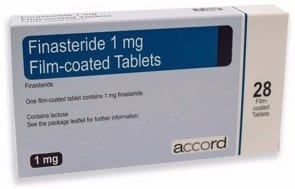
NOTE: Brands and packaging may differ from picture.
When starting the consultation you will be redirected to the treatments page where you can start the short questionnaire.

Same day dispatch if ordered before 2pm

Discreet and plain packaging

Free expert support & advice

GPhC Registered

Free Delivery (Orders Over £20)

Confidential & Discreet
Buy finasteride tablets
You can buy Finasteride if it’s been approved and prescribed by one of our clinicians, as it’s a prescription-only medicine in the UK.
Finasteride is a treatment designed for men with mild to moderate male pattern baldness to stop hair loss and regrow their hair.
Fill in a short online consultation about your health and your hair loss. A clinician checks your answers and decides whether finasteride is safe for you before anything is prescribed. If it’s approved, we will send it out in plain, discreet packaging.
What is finasteride?
Finasteride is the active ingredient in the tablets, it belongs to a group of medicines called 5-alpha-reductase inhibitors.
For male pattern hair loss, the dose is 1mg once a day. You might also see finasteride sold as a 5mg tablet, but that treats an enlarged prostate.
How does finasteride work?
Finasteride is the active ingredient and it belongs to a group of medicines called 5-alpha-reductase inhibitors. These inhibitors work by blocking a hormone called DHT (dihydrotestosterone) which shrinks hair follicles until they stop growing, thus leading to hair loss.
With less DHT reaching the follicles, hair loss slows down, and the follicles get a chance to recover. Finasteride only works while you take it, so you need to take it every day.
How effective is finasteride?
Studies show that Finasteride is 90% effective for treating hair loss in men.
Longer studies found the benefit help up over five years, and European dermatology guidelines list finasteride as a first-line treatment for male pattern hair loss.
In two-year trials leading to its approval, 83% of men taking 1mg finasteride had no further hair loss, compared with 28% on a dummy pill. Among men thinning at the crown, 66% showed visibly better hair growth in standard photos.
Give Finasteride 3 to 6 months of daily use before you judge whether it’s helping. And it only keeps working while you take it. The NHS notes that if you stop, the benefit can fade over the next 6 to 12 months.
How long does finasteride 1mg take to work?
You need to give Finasteride roughly 3 to 6 months of daily use before you can see a noticeable difference in hair thickness or a reduction in hair loss. The best results are seen after about a year of daily use.
Some men may shed a little more hair in the first few weeks as the follicles reset, this is normal and not a sign that the treatment isn’t working. is slow. Some men may notice a difference after three to six months, but fuller results usually take around a year of daily use.
If you’ve used Finasteride daily for several months and still can’t see any change, then check back in with a clinician.
Who can use finasteride?
Finasteride 1mg is usually suitable for adult men with male pattern hair loss. It is not for women or children. Women who are pregnant or could become pregnant should not even handle the tablets.
Complete an online consultation to see if you’re suitable for treatment on Finasteride. Whether it’s right for you also depends on your medical history, any other medicines you take, and your answers during the consultation. Following updated MHRA safety guidance, a few things matter, so please tell us if any apply to you:
- A history of depression or suicidal thoughts
- sexual side effects on similar medicines
- any prostate testing (finasteride can affect PSA results)
- liver problems
Who can’t use Finasteride
Finasteride isn’t right for everyone. Don’t take it if you’re a woman, under 18 years of age or if you’re allergic to finasteride or any of the tablet’s ingredients.
Women who are pregnant or could become pregnant shouldn’t handle broken or crushed tablets, because the active ingredient can harm a developing baby.
There are things a clinician needs to weigh up before prescribing, listed in the product information, so tell us during the consultation if any apply:
- depression or suicidal thoughts,
- sexual side effects on similar medicines,
- liver problems,
- any prostate or PSA testing, or use of other medicines in the same class.
Finasteride 1mg side effects
Not everyone gets side effects, and most men take finasteride without a problem. But you should know what to look for.
The more common ones affect sexual function:
- lower sex drive
- difficulty getting or keeping an erection
- problems with ejaculation
If you develop low mood, depression, or any thoughts of harming yourself while taking finasteride, stop taking it and contact a doctor straight away. If you are in crisis, call the Samaritans free on 116 123, or NHS 111. In an emergency, call 999.
The MHRA has strengthened its warnings on finasteride’s psychiatric and sexual side effects, and notes that sexual side effects themselves can sometimes contribute to low mood. If you experience any side effect, you can report it through the MHRA Yellow Card scheme.
How to take finasteride tablets
The usual dose is one 1mg tablet, once a day:
- Take it with or without food; either is fine.
- The time of day doesn’t matter, but taking it at roughly the same time each day makes it easier to remember.
- Swallow the tablet whole with water. Don’t crush or break it.
- Taking more than one a day won’t work faster or better, so stick to one.
Always follow the specific instructions that come with your prescription.
What if I miss a dose?
If it’s been less than 6 hours since your usual time, take it as soon as you remember. If more than 6 hours have passed, skip it and take your next dose as normal.
Don’t take two to catch up. The NHS advises the same. If you’re often missing doses, set a phone alarm or a daily reminder to help you remember.
Is finasteride 1mg right for my type of hair loss?
Finasteride is designed for male pattern hair loss, not every kind of hair loss. Male pattern is the most common type. It affects roughly a third of men by age 30, it affects half of men aged 50, and affects around 80% of men aged 70.
The usual signs of male pattern hair loss are:
- A receding hairline
- Thinning at the temples
- Thinning at the crown
- Gradual thinning across the top of the scalp
If your hair loss came on suddenly, is patchy, or doesn’t look like the pattern above, speak to your GP before starting an online treatment. That kind of hair loss can have other causes, such as stress, illness, rapid weight loss, or low iron levels, though these tend to be temporary and settle once the cause is addressed.
This is what the consultation is for. A clinician can look at what you’re describing and tell you whether finasteride is the right fit.
Can I drink alcohol on finasteride?
Yes. There’s no known interaction between finasteride and alcohol, so the NHS confirms you can drink normally while taking it. Finasteride also won’t affect your ability to drive, cycle, or use machinery, and there are no foods or drinks you need to avoid. As always, if your own clinician has given you specific advice for your situation, follow that.
What happens when you stop taking finasteride?
Finasteride only works while you’re taking it. If you stop, the DHT that drives male pattern hair loss returns to its usual level, and hair loss will usually resume over the following months. Exactly how fast varies from person to person, and any hair you regrew or held onto is gradually lost again.
If you’re thinking about stopping Finasteride, speak to a clinician first.
What if finasteride isn’t working?
Finasteride is slow to act, you will see visible results after several months of daily use, so ensure you’re taking it everyday at the same time before you decide it isn’t working.
If you’ve done all that and there’s still no change then our clinicians can talk you through the options:
- adding or switching to minoxidil,
- trying something else,
- or deciding no treatment is the right call for you.
- Don’t raise the dose. More Finasteride doesn’t mean more regrowth.
Alternatives to finasteride
If finasteride isn’t right for you, there are other options. The main one is minoxidil, a treatment you apply to the scalp, and some men use it alongside finasteride rather than instead of it. Dutasteride works similarly to finasteride and is sometimes used instead; for hair loss, it’s prescribed off-label.
Beyond medicines, there are non-drug routes such as a hair transplant, scalp micropigmentation, or a wig. The right choice depends on the type of hair loss you have, your medical history, and what you’d prefer. A clinician can help you weigh them up.
FAQs
When should I start hair loss treatment?
According to available data, it appears that younger men who have been balding for a shorter period and have smaller areas of baldness may respond to treatment sooner. Nonetheless, it is important to note that there is no firm evidence to support this claim, as responses to treatment can vary significantly from person to person.
Should I use finasteride with minoxidil?
Finasteride and minoxidil work in completely different ways, which is why some men use both. Finasteride lowers DHT to slow the loss. Minoxidil works at the scalp to support hair growth. Used together, they tackle the problem from two angles, and the combination has been shown to work better than either one alone. Whether it’s right for you is a question for your clinician. Ask during the consultation rather than combining treatments on your own.
More Treatments Available
Regulated care you can trust
MHRA-approved and GPhC regulated; we strive to provide the highest standards of care.
General Pharmaceutical Council
General Pharmaceutical Council
The GPhC is the regulator that inspects pharmacies to make sure they meet the highest standards, keeping your safety their top priority.
National Pharmacy Association
The NPA represents independent pharmacies across the UK, offering advice, support, and providing our professional indemnity cover.
Medicines & Healthcare products Regulatory Agency
The MHRA makes sure medicines and medical devices are safe and effective. They approve licenses and monitor safety through the Yellow Card scheme. All our products are MHRA approved.
Digital Clinical Excellence
DiCE is a UK network that works to improve safety and quality in digital healthcare.
How it
works?
1. Consultation
Fill out a quick, free online questionnaire for the condition you may have.
2. Treatment
Choose your preferred treatment and proceed to checkout.
3. Assessment
Our clinicians review your information and may follow up if needed.
4. Delivery
Your medication is approved and delivered quickly in discreet packaging.
Meet our medical professionals
Our clinicians are experts in medicines, nutrition, patient care, and governance.










Aaliyah Nelson
Nutritionist