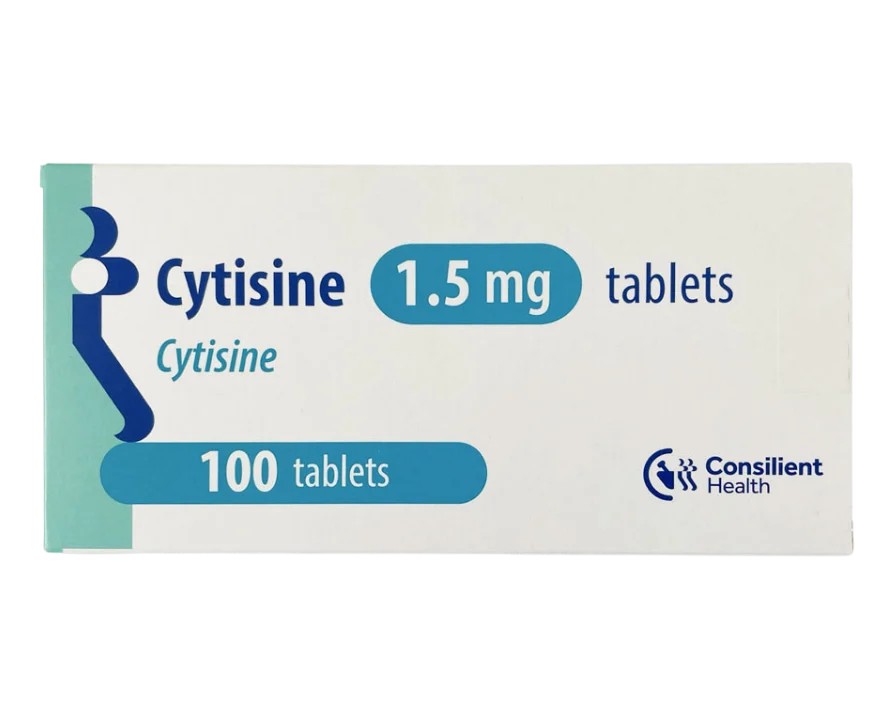
Cytisine tablets are a prescription-only medication used to help people quit smoking.
- Reduces nicotine cravings and withdrawal symptoms
- Makes smoking feel less rewarding
- Nicotine-free treatment
Pricing
| 1.5mg | |
100 Tablets (25 Day Course) | £134.99 |
GPhC Registered
Free Delivery (Orders Over £20)
Confidential & Discreet
Buy Cytisine
How to order Cytisine online:
- Complete a short online assessment to see if you’re eligible for treatment
- Reviewed by one of our clinicians
- If approved, we post it to you with tracked delivery and discreetly
What is cytisine?
Cytisine is a nicotine-free, prescription-only medicine that helps you stop smoking. It works by reducing cravings and withdrawal symptoms, and makes a cigarette less satisfying to smoke.
How does cytisine work?
Smoking delivers nicotine to your brain, where it triggers a release of dopamine, the chemical behind the hit of pleasure and reward. That reward is what keeps you smoking. When you stop smoking, dopamine levels drop, and your brain reacts with classic withdrawal symptoms of cravings, anxiety, irritability and headaches.
Cytisine attaches to the same brain receptors as nicotine. From there, it does two things at once: it partially activates those receptors itself, which softens cravings and withdrawal, while also blocking nicotine from binding properly, so a cigarette feels less rewarding if you do smoke one. These two effects gradually ease you off nicotine dependence.
How effective is cytisine?
A placebo-controlled trial found that people taking cytisine were more than three times as likely to have quit smoking after 12 months compared with those taking a placebo (8.4% versus 2.4%). A more recent review confirmed cytisine clearly outperforms a placebo, and a separate head-to-head trial found it worked at least as well as, and to some extent better than, standard nicotine replacement therapy.
How do I take cytisine?
Start taking cytisine while you’re still smoking, then aim to quit no later than day 5 of treatment.
| Days of treatment | Dose | Maximum in 24 hours |
|---|---|---|
| Days 1 to 3 | 1 tablet every 2 hours | 6 tablets |
| Days 4 to 12 | 1 tablet every 2.5 hours | 5 tablets |
| Days 13 to 16 | 1 tablet every 3 hours | 4 tablets |
| Days 17 to 20 | 1 tablet every 5 hours | 3 tablets |
| Days 21 to 25 | 1 to 2 tablets a day | 2 tablets |
The full course lasts up to 25 days. Swallow each tablet with water, and don’t crush, chew or split them. If you miss a dose, take the next one at the usual time; don’t double up to make up for a missed dose.
Who can and cannot take cytisine?
Don’t take cytisine if you:
- Are pregnant, think you may be pregnant, or are breastfeeding
- Have had a heart attack in the last 6 weeks, or a stroke in the last 6 months
- Have unstable angina or an abnormal heart rhythm
- Are allergic to cytisine or any of its ingredients
- Have severe kidney or liver disease
- Are under 18
- Are taking anti-tuberculosis medication
A clinician or doctor will need to check whether cytisine is suitable for you if you have certain conditions, including angina, heart failure, untreated high blood pressure, a history of stroke risk factors, stomach ulcers, acid reflux, an overactive thyroid, diabetes, or a history of mental health conditions such as schizophrenia.
When completing the online consultation, always provide your full medical history so your prescriber can check whether cytisine is safe and suitable for you.
What are the common side effects of cytisine?
You may not get any side effects at all. When they do occur, they’re usually mild to moderate, and most occur in the first few days of treatment. It can be hard to tell what is a side effect and what is withdrawal from stopping smoking.
Common: dry mouth, difficulty sleeping, headaches, nausea, constipation or diarrhoea, irritability or anxiety, increased appetite and possible weight gain, and fatigue.
Less common: changes in heart rate or blood pressure, heartburn, abdominal pain, or sweating.
Tell a healthcare professional about any side effects that bother you or don’t settle. For the full list, read the patient information leaflet, and you can report side effects yourself through the MHRA’s Yellow Card scheme.
How long can I take cytisine for?
Treatment runs for 25 days, with your quit date being no later than day 5. Smoking beyond day 5 of treatment raises the chance of side effects because you’re combining nicotine with a medicine that mimics some of its effects. If it doesn’t work, don’t restart cytisine straight away; wait 2 to 3 months before trying again.
Cytisine vs other treatments
Cytisine is often compared with Champix (varenicline) and Zyban (bupropion). Like varenicline, it helps reduce cravings and withdrawal symptoms. It may have a milder side-effect profile, with fewer reports of nausea and sleep disturbance than varenicline, and it has a much shorter treatment course: 25 days, compared with 8 to 12 weeks for varenicline or Zyban. The shorter course can also make it a more affordable prescription option.
FAQs
Can I take cytisine with hormonal contraception or HRT?
Cytisine’s effect on hormonal contraception, such as the pill, patch or ring, isn’t fully known, and it may make these less effective or increase the chance of side effects. If you’re using hormonal contraception, use an additional barrier method, such as condoms, for the duration of treatment.

References
- Quit smoking with nicotine-free medicines, NHS Better Health [accessed 25th September 2026]
- Cytisine 1.5mg Tablets: Summary of Product Characteristics, Electronic Medicines Compendium (emc) [accessed 25th September 2026]
- Smoking cessation, NICE Clinical Knowledge Summaries [accessed 25th September 2026]
- Smoking cessation: treatment summary, British National Formulary (BNF), NICE [accessed 25th September 2026]
- Yellow Card Scheme, Medicines and Healthcare products Regulatory Agency (MHRA) [accessed 25th September 2026]
- West R, et al. Placebo-controlled trial of cytisine for smoking cessation (2011) New England Journal of Medicine [accessed 25th September 2026]
- Livingstone-Banks J, et al. Nicotine receptor partial agonists for smoking cessation (2023) Cochrane Database of Systematic Reviews [accessed 25th September 2026]
- Walker N, et al. Cytisine versus nicotine for smoking cessation (2014) New England Journal of Medicine [accessed 25th September 2026]
You may also like...
More Treatments Available
Regulated care you can trust
MHRA-approved and GPhC regulated; we strive to provide the highest standards of care.
General Pharmaceutical Council
The GPhC is the regulator that inspects pharmacies to make sure they meet the highest standards, keeping your safety their top priority.National Pharmacy Association
The NPA represents independent pharmacies across the UK, offering advice, support, and providing our professional indemnity cover.
Medicines & Healthcare products Regulatory Agency
The MHRA makes sure medicines and medical devices are safe and effective. They approve licenses and monitor safety through the Yellow Card scheme. All our products are MHRA approved.
Digital Clinical Excellence
DiCE is a UK network that works to improve safety and quality in digital healthcare.
How it
works?
1. Consultation
Fill out a quick, free online questionnaire for the condition you may have.
2. Treatment
Choose your preferred treatment and proceed to checkout.
3. Assessment
Our clinicians review your information and may follow up if needed.
4. Delivery
Your medication is approved and delivered quickly in discreet packaging.
Meet our medical professionals
Our clinicians are experts in medicines, nutrition, patient care, and governance.
Aaliyah Nelson
Nutritionist