




How to Stop Snoring: Causes, Treatments and Practical Solutions
Table of Contents
Snoring. That common sound that can disrupt your partner’s sleep, cause nudges to be quiet, and questions such as “was that plane overhead last night or you?”. Millions of people across the UK are familiar with the effect that snoring can have, on your and your sleep partner’s sleep. But, what many do not realise is the impact that snoring can have on your overall health too.
Whether you’re the one lying awake listening to it, or the the one snoring, disrupted sleep can lead to fatigue, irritability, and reducing concentration during the day.
In some more extreme cases, snoring can also be a signal for an underlying health condition. Understanding the possible causes of your snoring, and how to manage it, can help you (and your household) get that peace of mind. And that better night’s sleep you need.
What Causes Snoring?
Snoring happens when airflow through the mouth or nose is partially blocked during sleep. Causing the soft tissue in your throat to vibrate as you breath creating that familiar snoring sound.
This blocked airflow is due to a narrowing of the airway which can be caused by a variety of reasons; from lifestyle, anatomy, or temporary conditions. We’ve all had a cold which can temporarily cause some light snoring while we recover.
What can be key in identifying the most effective way to stop snoring, is to discover what type of snoring you experience. This is based on where exactly that snoring sound is coming from.
Types of Snoring
Nasal Based Snoring: During sleep we are naturally designed to breathe through the nose. If, for whatever reason the nose is blocked then we will automatically breathe through the mouth instead. Sometimes leading to snoring.
Mouth Snoring: If you’re a ‘mouth breather’ and often sleep with your mouth open, then you’re highly likely to snore.
Tongue Based Snoring: This type of snoring happens when the tongue falls back during sleep causing an obstruction that air is trying to get passed. Pushing past the tongue, air will often vibrate the tongue causing snoring.
Throat Snoring: Often the loudest form of snoring, snoring from the throat is associated with an obstruction deeper in the airways which air is trying to push its way through.
Lifestyle Causes of Snoring
Without even realising it, some daytime habits can increase your likeliness of snoring at night.
Alcohol can relax the throat muscles, increasing the likeliness of an airway blockage, while also potentially causing irritation and congestion in the nose which further restricts airflow. By cutting down on alcohol intake, or by at least stopping drinking at least 4hrs before going to bed, the effects of alcohol on your snoring will reduce significantly.
Smoking, regardless of if cigarettes, cigars, or vapes, can irritate the nose and the throat causing swelling and phlegm (catarrh) build-up, reducing the airflow through the nose and throat. Even passive smoking an cause an inflammation in the nose and throat, increasing the risk of snoring. Quitting smoking can be an effective way to prevent snoring in not just yourself but those around you.
For more help and support in quitting smoking visit our Stop Smoking page for more.
Excess weight and obesity can lead to excess tissue and fat around the neck and throat area. More tissue and fat around the neck can cause the airway to narrow and more likely to vibrate; more likely to snore. Losing weight, and reducing excess fat can certainly improve snoring. Weight loss is best achieved by a combination of improved diet, alongside exercise, and weight loss injections if support is needed.
Learn more about how Losing Weight Helps With Snoring.
Sleeping position and how you sleep can play a key role in how well a night’s sleep we get. Lying on your back is more likely to cause your tongue to fall to the back of your throat causing throat snoring due to the obstruction.
Age can also make snoring more likely. As we we get older, we might notice more restless nights due to snoring. Reduced muscle tone over time can relax the airways making blocked airways more likely and so, snoring more common.
Medical Causes of Snoring
Some medical conditions can also be a cause for snoring, or closely linked to increased risk of snoring.
Allergies and blocked nose due to inflammation or nasal polyps restricting airflow in the nose.
Enlarged tonsils block airflow in the throat, especially when they may become inflamed.
A deviated septum where the thin wall of bone and cartilage dividing the nostrils is crooked or displaced, making one nasal passage smaller than the other one. This can cause an obstruction or blockage in the nose.
Sleep apnoea is a condition whereby your breathing is interrupted during sleep. Usually due to a severe obstruction of the airflow at the back of the throat meaning that air cannot flow as it should to and from the lungs. Snoring is caused by the body trying to push air through the narrowed airway. But when airflow is too obstructed, the body will jolt awake in order to start breathing again.
Some cases of snoring may be a sign of an underlying condition. Frequent and loud snoring should be discussed with a healthcare professional to make sure there isn’t a more serious issue causing it.

Temporary Causes of Snoring
Snoring isn’t always a long-term issue, and can often be a short-term nuisance which can be caused by temporary conditions.
Colds and flu are perhaps one of the most common causes of temporary snoring. As viruses and bacteria cause inflammation and congestion in the nose, most then breathe through their mouths causing snoring.
Pregnancy can cause snoring with the likeness increasing with each trimester. Up to 53% of pregnant people report they started snoring during pregnancy due to the hormonal changes causing increased fluid build-up in the nose and throat, weight gain which can compress the airways, and increased blood flow which can reduce space in the nose and throat making it harder to breathe through the nose at night. All of which can become clear when lying down.
Certain medications can also cause likeliness of snoring, particularly sedatives and muscle relaxants which can relax the soft tissue in the throat causing a narrowed airway during sleep.
How to Stop Snoring Naturally
If you’re looking for natural ways to stop snoring, here are a few tricks that you can try.
Change Your Sleep Position
If you tend to sleep on your back, try sleeping on your side instead. This can help prevent the tongue and soft tissue from narrowing the airways allowing you to breathe easier. Some people find body pillows or positional aids such as specialised pillows or wedges, could help train your body to maintain this non-snoring sleeping position comfortably.
Weight Loss and Exercise
Losing even a small amount of excess weight can reduce fatty tissue around the neck, improving airflow. Regular exercise can also strengthen muscles involved in breathing making it easier to breathe clearly even when asleep.
Reduce Alcohol Intake
If you find that alcohol might be a key trigger for a night of heavy snoring, then reducing alcohol intake may be a helpful solution. Alcohol should especially be avoided close to bedtime. Aim to have your last drink at least 4 hours before sleeping. This reduces the alcohol’s relaxant effect so the muscles in the neck and keep airways clear and snoring-free.
Improve Nasal Breathing
Keeping your nasal passages clear can be an effective way to reduce snoring. This can be done with:
- Steam inhalation
- Saline sprays
- Allergy management such as antihistamines or mild steroid nasal sprays
Improving your nasal airflow can keep breathing comfortable and obstruction free, leading to a quieter, more consistent night of sleep.
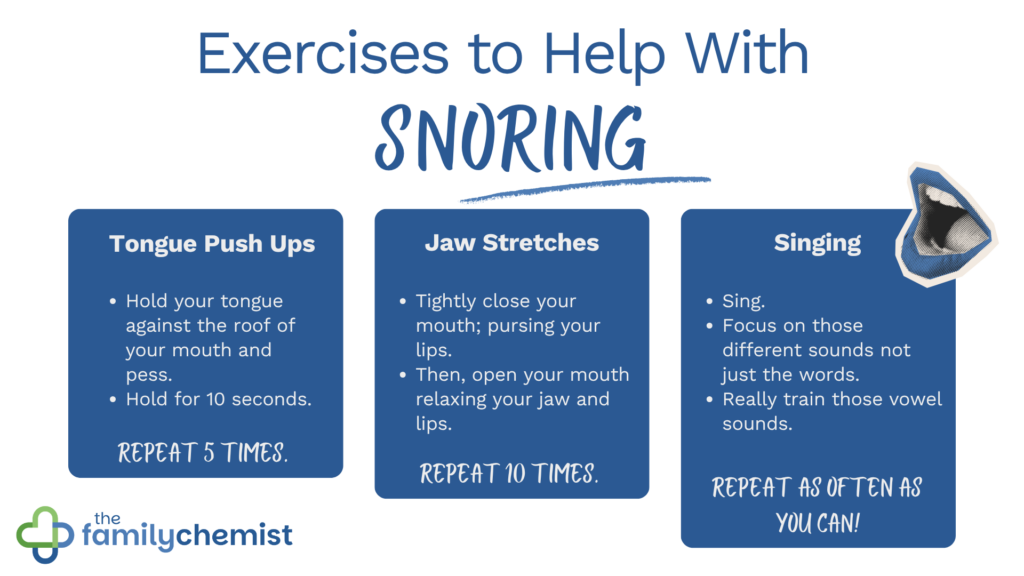
Mouth and Throat Exercises
Targeted exercises (sometimes called oropharyngeal exercises, myofunctional therapy, or upper airway exercises) can strengthen the muscles in your tongue and throat. Over time, this can help keep airways clear and prevent soft tissue collapse, reducing the chance of tissue vibration and snoring.
Snoring Devices That May Help
If you find that changes in sleeping habits and lifestyle changes haven’t helped with your snoring, then there are a range of clinically supported snoring solutions too. Designed to improve airflow while not disrupting your sleep.
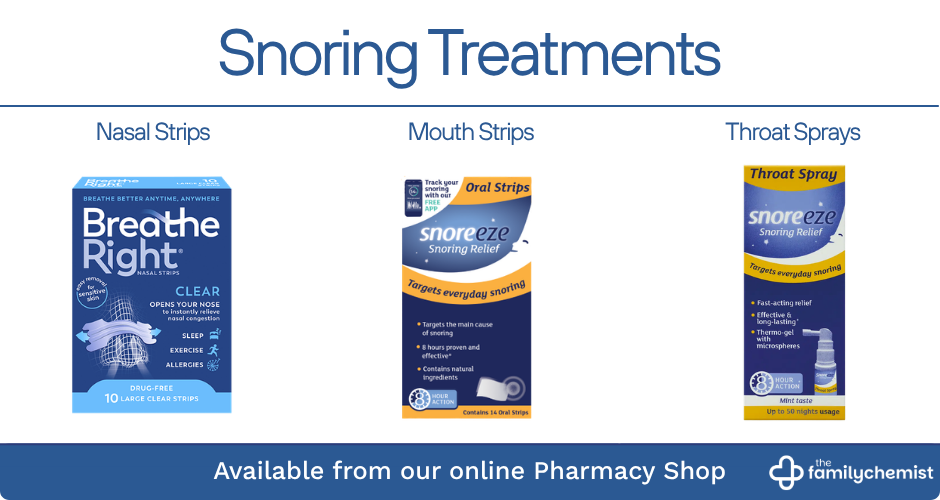
Nasal Strips and Dilators can open nasal passages making it easier to breathe at night.
Anti-snoring Mouth Strips which keep the soft tissue at the back of the throat hydrated, supporting clearer airflow during sleep.
Chin Straps can be worn at night to encourage breathing through the nose in those who may naturally breathe through the mouth. These should only be used if nasal passages are clear and there is no obstruction to breathing through the nose while asleep.
Throat Sprays alike the mouth strips can help keep the throat hydrated to reduce vibration.
With The Family Chemist, we offer a range of sleep and snoring related aids which have been carefully selected to offer practical and effective solutions.
When Snoring Might Indicate Sleep Apnoea
Occasional snoring, especially after a drink or during cold and flu season, while disruptive, is usually harmless. However, when snoring is persistent, loud, or is paired with harsh jolting awake, then this could be a sign of sleep apnoea.
Symptoms of sleep apnoea may also include:
- Gasping or choking during sleep
- Excessive daytime fatigue
- Morning headaches
- Waking with a dry mouth
- Difficulty concentrating
Sleep partners might also report clear pauses in breathing during the night with sleep apnoea.
If left untreated, the long-term effects of sleep apnoea far extend sleepless nights, but could result in serious health issues such as high blood pressure and cardiovascular disease.
When to Speak to a Doctor
You should seek advice from a medical professional if:
- Your snoring is loud and persistent
- You have pauses in breathing during sleep
- You feel extremely tired despite getting a full night’s rest
- Snoring is affecting your quality of life or relationships
A healthcare professional can help you determine whether your snoring is harmless or might be linked to an underlying health condition such as sleep apnoea. They may also be able to offer advice on improving sleep quality or when you may need to seek further intervention from a specialist.
Treatments Available
Depending on the cause of the snoring, a healthcare professional may recommend that you try a combination of lifestyle changes, over-the-counter solutions, or for more persistent or severe cases might recommend medial treatments. Such as:
- Continuous Positive Airway Pressure (CPAP) therapy
- Custom fitted oral appliances fitted by a dentist
- Surgery to correct structural issues (such as deviated septum or enlarged tonsils)
- Prescription treatments for allergies or nasal congestion
With The Family Chemist, we provide a range of over-the-counter sleep and snoring aids which are delivered direct to your door.
The Bottom Line
Snoring can often be more than just a bedtime annoyance, it can affect your health, your relationship, and your daily wellbeing. Long term, disrupted sleep can cause mood changes, concentration, and fatigue. The good news is that there are effective options available to manage it.
From lifestyle changes to targeted snoring solutions, options are available for a quieter night sleep for everyone in the household.