




Consultation Complete
Please select from the treatments we recommend below.
Inhalers and Spacers for School
Asthma inhalers and spacers can provide important emergency support for children whose regular inhaler is broken, forgotten, lost, or empty. Having access to an inhaler and spacer when needed can help ensure children receive their prescribed reliever medication without delay during an asthma episode when their usual inhaler may not be available.
Emergency salbutamol inhalers and spacers are available for children who have been diagnosed with asthma or who have been prescribed a reliever inhaler, when their own inhaler is unavailable or cannot be used in an emergency.
While schools are not required to hold an emergency inhaler, many schools are choosing to do so to help protect the health and safety of children who have asthma.
All children who may require the use of an emergency inhaler must have appropriate parental consent in place. Our school service allows schools to order inhalers and spacers by selecting the products you want to order, and uploading a signed letter from the headteacher or principal of the school or institution.
You then need to send the physical copy of this signed letter to our office within 2 working days of the order. The address can be found on our contact page.
The written request must be in line with the Department of Health guidance on school letterhead paper and include:
- The name of the school
- The date of request
- The purpose for the order
- The inhaler requested and quantity
- The full name and signature of the headteacher or principal
Spacers can be provided without a signed order request.
£13.99
- Pressurised metered dose salbutamol inhaler.
- Emergency reliever for asthma.
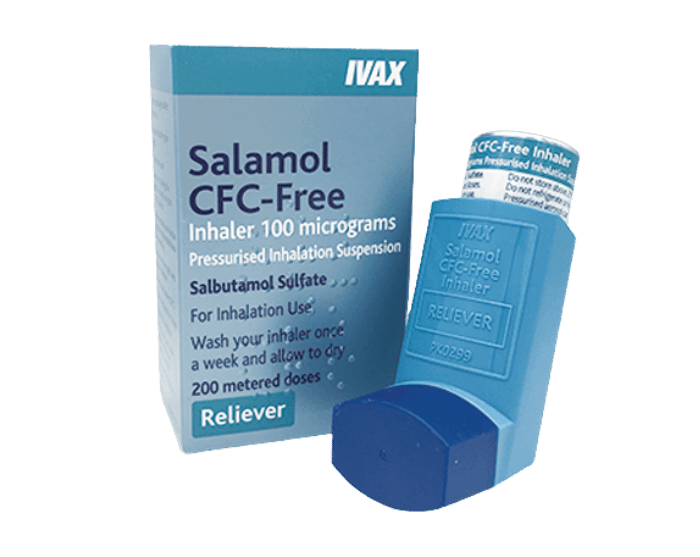
£13.99
£13.99
- Valve holding chamber for easy medication delivery.
- No mask attached.
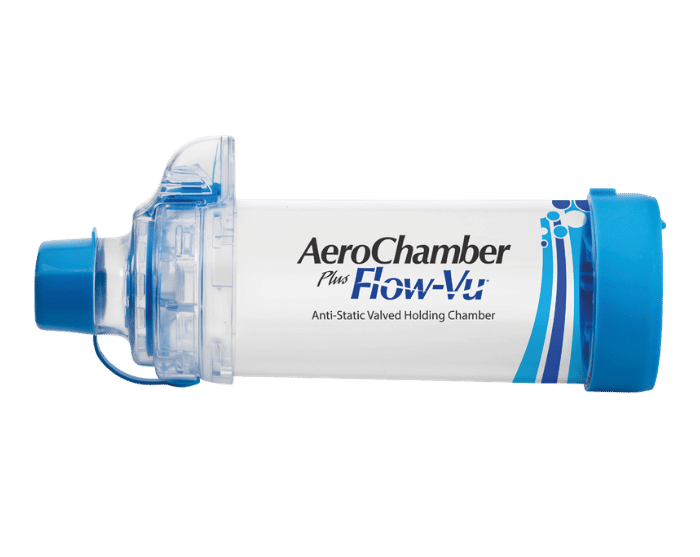
£13.99
£13.99
- Easy-to-use spacer for infants under 18 months old.
- With a mask attached for easy use.
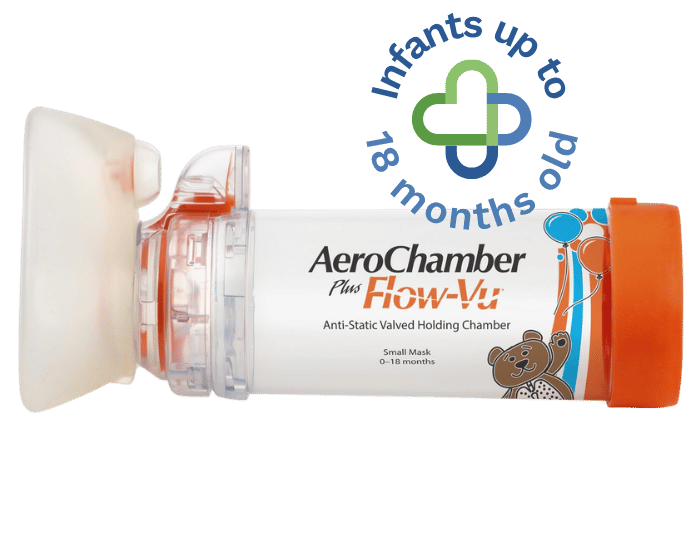
£13.99
£13.99
- Easy-to-use spacer for children aged 1 – 5 years old.
- With a mask attached for easy use.
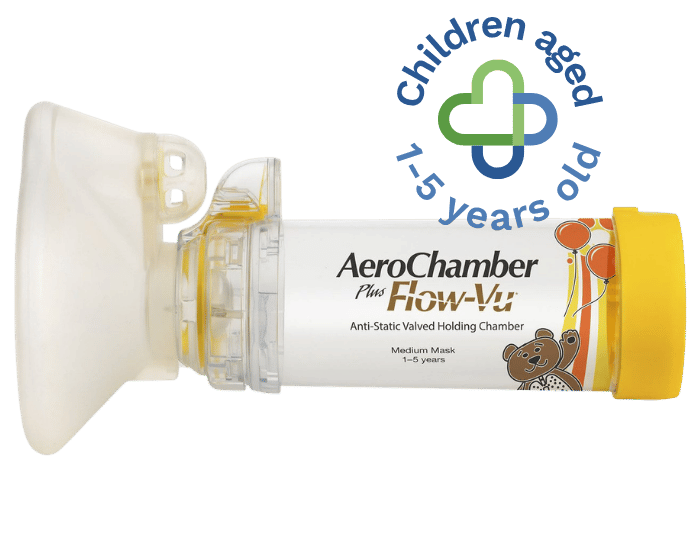
£13.99
£13.99
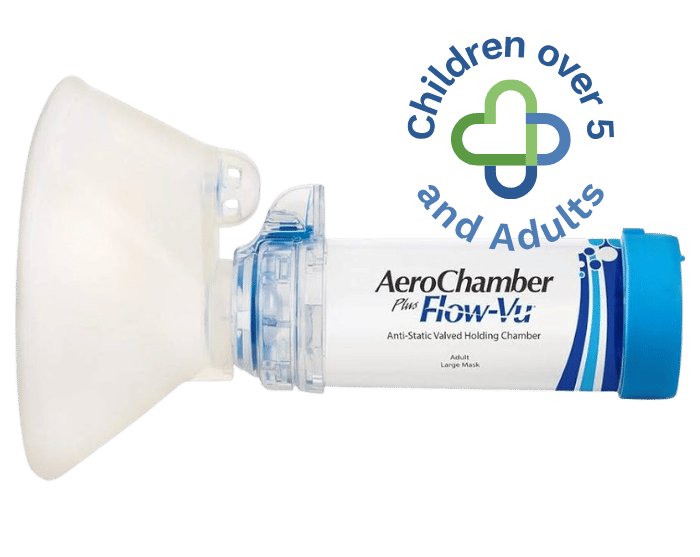
- Easy-to-use spacer for children and adults over 5 years old.
- With a mask attached for easy use.
£13.99

Inhalers and Spacers FAQ's
Schools are able to purchase salbutamol inhalers and accompanying spacers for emergency use, in line with UK guidance, from The Family Chemist by uploading a signed request from a headteacher or principal. Then select the inhaler and quantity that you require and add to basket.
Emergency inhalers supplied for schools are salbutamol pressurised metered-dose inhalers (pMDIs) that schools can keep for use in an emergency when a student’s own reliever inhaler is not available due to loss, being broken, or being empty.
While it is not a legal requirement that schools hold an emergency inhaler, many choose to do so for improved student health and safety.
An emergency salbutamol inhaler can only be used by students who have been diagnosed with asthma or who have been prescribed a reliever inhaler, and who have recorded consent from a parent/carer to use the school’s emergency inhaler.
Schools are responsible for obtaining and recording the necessary consent in line with their own policy for supporting students with medical conditions.
No, schools can purchase salbutamol inhalers for emergency use without a prescription. The purchase will require schools to complete a signed order form containing:
- the name of the school
- the purpose of the inhaler required
- the named inhaler and required quantity
Signed order forms can be uploaded online using our website, the original must be mailed to us within 2 working days of the request.
For emergency use in school, only salbutamol pressurised metered-dose inhalers (pMDIs) may be purchased.
Other inhalers cannot be supplied, such as autohalers, accuhalers, clickhalers, inhaled corticosteroids (ICS), or combination inhalers where one medication is salbutamol. These are all excluded from this service.
A spacer is a device used with a metered-dose inhaler to make it easier to deliver the full dose of medication into the lungs. Spacers can be particularly helpful for young children for easier medication delivery.
At The Family Chemist, we offer AeroChamber Plus spacers for use with salbutamol inhalers. These can be purchased without a signed order request.
AeroChamber Plus spacers are available in different sizes to suit children of different ages. The size needed depends on the child’s age and whether they require a face mask:
-
For younger children: AeroChamber Plus spacers are available with an appropriately sized face mask attached, making it easier for young children who may not yet be able to use a mouthpiece correctly.
-
For older children who can use a mouthpiece: a mask may not be necessary. We also stock the AeroChamber Plus Flow-Vu, which has a mouthpiece and does not have a mask attached.
If an inhaler (and spacer) have been used in an emergency, they should then be given to the child who has used them. They should not be use again for another child. A new inhaler and spacer should instead be used to replace stock.
An emergency asthma kit should contain all of the equipment and information needed to support the school’s asthma emergency procedure.
The Department of Health recommends that an emergency kit should contain:
- a salbutamol inhaler
- at least two compatible and suitable spacers
- instructions on using the inhaler and spacer
- instructions on cleaning and storage of the inhaler
- a record of inhalers, including their batch numbers and expiration dates
- arrangements for replacing inhalers and spacers that have been used or expired
- a list of children permitted to use the emergency inhaler
- a record of when the inhaler has been used
Schools may choose to hold more than one emergency kit, depending on the size of the school. Ensuring that all children who may need to use the emergency kit are close to one.
Emergency inhalers should be stored following their specific storage instructions for the inhaler supplied. This is usually below 25°C, protected from direct sunlight and extreme temperatures.
Inhalers and spacers should be clearly labelled as for emergency use and not stored near a student’s own inhaler.
They should be easily accessible in an emergency in a safe location out of children’s direct reach. They should not be locked away where this could delay access in an emergency.
Signs of an asthma attack are:
- finding it hard to breathe
- breathing more quickly
- a wheezing sound coming from the chest
- being unable to talk, walk, or eat
- complaining that their chest feels tight (younger children may express this as a tummy ache)
Call an ambulance immediately and continue with the asthma emergency procedure if you notice any of the following:
- has a blue/white tinge around the lips
- is going blue in the face
- has collapsed or showing signs of extreme exhaustion
A school’s asthma emergency procedure should always be followed.
General asthma emergency guidance states that you should:
- keep calm and reassure the child
- encourage the child to sit up and slightly forward
- use the child’s own inhaler and spacer, and if not available use the emergency resources
- help the child to take two separate deep puffs from the inhaler
- if there is not immediate improvement, continue to give two puffs at a time every two minutes (maximum of 10 puffs)
- if the child does not feel better or if you are worried at anytime, call 999 for an ambulance
- if the ambulance does not arrive in 10 minutes, continue using using the inhaler, using one puff every 30 to 60 seconds up to a maximum of 10 puffs.
Schools should ensure that all staff members have the appropriate information and training to respond to pupils with medical conditions. For asthma specifically, schools should ensure that any staff member who may be involved in administering an inhaler understands the school’s asthma policy, knows where the emergency kit is located, and knows correct inhaler and spacer directions.
As part of a school’s asthma policy, at least two staff members should be nominated to take responsibility for maintaining asthma emergency equipment. They should conduct regular checks for expiry date, equipment condition, quantity remaining, and should also be responsible for sourcing replacement inhalers/spacers where needed.
For more information about asthma and spotting the signs:
For more information about emergency inhalers and spacers:
Guidance on the use of emergency salbutamol inhalers in schools



How it
works?
1. Consultation
Fill out a quick, free online questionnaire for the condition you may have.
2. Treatment
Choose your preferred treatment and proceed to checkout.
3. Assessment
Our clinicians review your information and may follow up if needed.
4. Delivery
Your medication is approved and delivered quickly in discreet packaging.
How to
How It Works
Join our newsletter
Sign up to enjoy regular updates, exclusive promotions, and special offers.