





 Our last order date is Tuesday 31st March. For festive opening times,
 Observing Ramadan with Care: Guidance on Fasting While Using a GLP-1 Medication
Ramadan is the ninth month of the Islamic calendar and an important time for millions of people around the world. This period of time is sacred for Muslims, marked by fasting, prayer, reflection, and coming together as a community. From sunrise to sunset, Muslims who are able and who wish to fast; abstaining from food and drink until they break fast each evening. For many, this fasting during Ramadan is about self-discipline, mindfulness, and spiritual wellbeing.
It’s important during this time that individual’s health is also considered. For this reason, those who are unwell, pregnant or breastfeeding, those who are older, travelling, or at any risk are exempt from fasting and may choose to fast later, or dedicate time to charity instead of fasting. For those who are on a treatment plan or taking any medications, individual circumstances should always be considered when it comes to observing Ramadan.
If you are using a GLP-1 medication such as Mounjaro (tirzepatide), Wegovy (semaglutide), or Nevolat (liraglutide), for weight care or weight management, then it might be hard to know how best to observe Ramadan safely. With the right care, planning, and professional advice, it is still possible to fast while continuing treatment. Listening to your body and prioritising your safety.
Ramadan as a Form of Fasting
From a nutritional perspective, Ramadan is a form of time-restricted eating. Food and drink are only consumed during the non-fasting hours, at suhoor (before sunrise) and iftar (after sunset). This daily pattern differs from other forms of fasting diets because of the complete abstinence of foods and drink. This can have an influence on hydration levels, blood sugar levels, appetite regulation, and energy balance.
Research suggests that this form of fasting can offer many benefits when it comes to metabolic changes. Improving insulin sensitivity, reducing HbA1C ( average blood glucose), improving blood pressure, and aiding weight loss. These results can vary from one person to the next, and this form of fasting is not completely without risk; especially when paired with GLP-1 medications.
Fasting Considerations with GLP-1 Medications
GLP-1 treatments such as Mounjaro, Wegovy, and Nevolat work by reducing appetite, slowing how quickly the stomach empties, and improving blood sugar control. During Ramadan, these effects can be amplified due to long periods of fasting, and reduced eating windows.
Careful planning is key. Medication timing might need to be shifted, and hydration will need to be prioritised during the time between sunset and sunrise. Some people on GLP-1s might experience side effects such as nausea, dizziness, tiredness, or constipation, which might be more noticeable during fasting hours, especially if fluid intake is low.
It is not advised to increase your dose during Ramadan, as increasing your dose can cause side effects to be more difficult to manage.
Tips for Fasting Safely
Planning ahead is essential. Before Ramadan begins, speak with a healthcare professional to discuss whether fasting is appropriate and safe for you, and how best to adjust your routine to ensure you’re safe.
At suhoor (sunrise) and iftar (sunset), aim for balanced meals that can support the steady release of energy, and ensure you’re well hydrated.
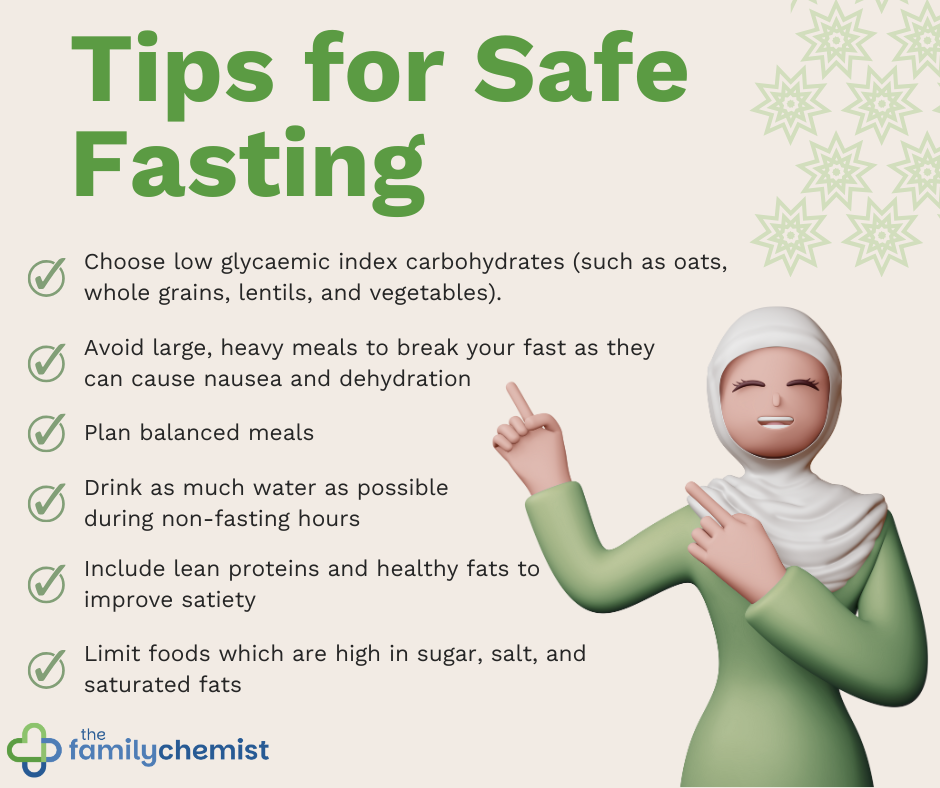
If you’re experiencing side effects, begin to feel unwell, or show signs of dehydration, then it might be necessary to pause fasting and discuss the best plan of action with a healthcare professional.
Personalised Support during Ramadan
Everyone’s health and health needs are unique. What works for one person might not work for the next, and so it’s important to listen to your body this Ramadan. Especially if you are on a treatment plan for weight management.
With The Family Chemist, we can offer professional guidance with our qualified nutritionist. They can work with you to create meal plans, ensuring you are maintaining the nutritional balance you need.

The Bottom Line
If you’re considering fasting while using GLP-1 medication, we encourage you to speak to a healthcare professional before Ramadan begins. Your health comes first, and with the right support, it is possible to observe this meaningful time safely and mindfully.