





What Age Does Hair Start Thinning?
For many people, hair thinning can begin earlier than expected. While it is often seen as a natural part of aging, it can be disheartening to notice it begin before we expect it to. Around a quarter of men with inherited hair loss notice changes before the age of 21, and by the time men reach the age of 50, roughly half will have visible hair thinning to some degree. For women, however, hair thinning tends to appear later on in life, typically after 40 years old.
Of course, this all varies from one person to the next. For men whose genes can mean they are predisposed to hair loss, it usually takes between 15 – 25 years before they go completely bald. Spotting the early signs can help to slow progression and help maintain healthy hair.
Why Do Men Lose Their Hair?
The most common reason men experience hair thinning is androgenetic alopecia, also known as male pattern baldness (and female pattern hair loss). This process of hair thinning and then hair loss is caused by a hormone called dihydrotestosterone (DHT), which is a byproduct of testosterone. DHT makes hair follicles shrink, producing thinner, shorter hairs until the hairs stop growing altogether.
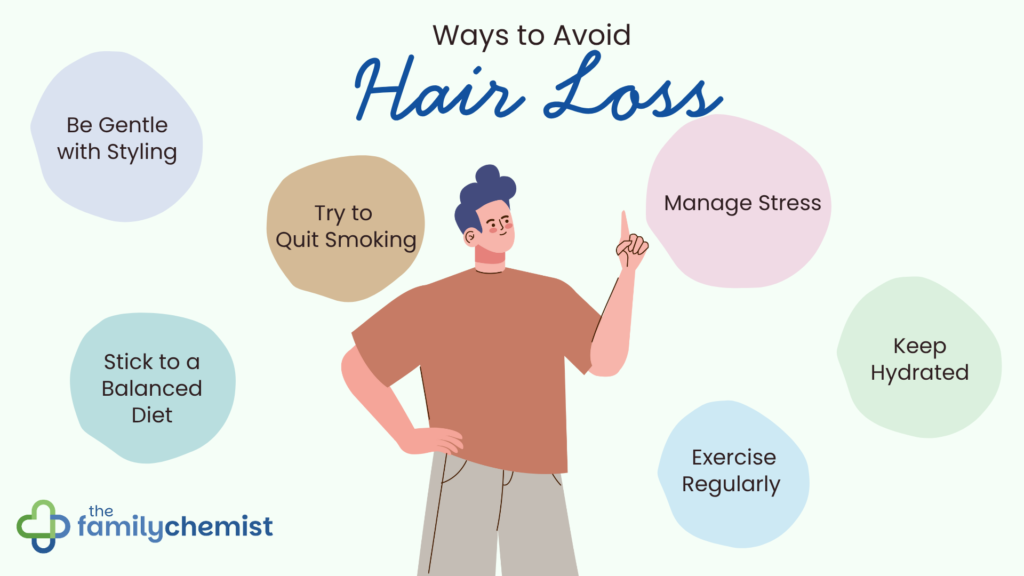
Although androgenetic alopecia is primarily caused by genetics, other factors such as stress, medical conditions, poor diet and nutrition, smoking, and hydration can all contribute to hair shedding. While these factors will not directly cause you to go bald, they can play a major role in overall thinning and weaker hair.
How Can You Tell If You Will Go Bald?
It’s hard to predict hair loss exactly because there are many factors which all play together to speed up or prevent hair thinning and hair loss. Your family history, however, can show important clues as to what your hair’s future might hold. If you notice that close male relatives are showing early signs of hair loss, or have significant hair loss at a younger age, then your risk, I’m afraid, is higher.
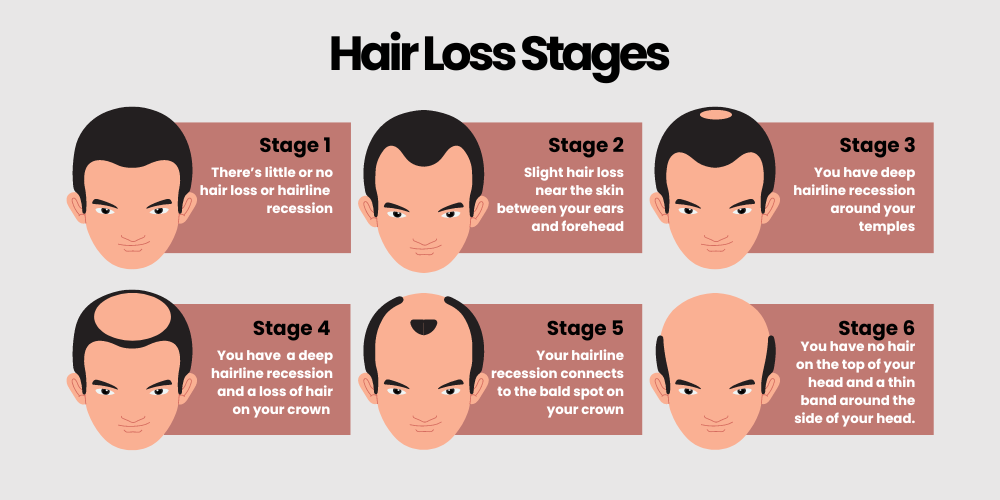
Another way to ‘predict’ how your hair will fare is by watching your hairline and how it might have changed in your early twenties. It’s normal for a shift in your hair as you mature; especially as you leave puberty. But, continued receding or visible thinning at the crown of the head might suggest the beginning of androgenetic alopecia.
Hair thinning and hair loss is gradual, so it’s key to keep an eye on the signs early when intervention can help. Subtle changes can help you decide when you wish to seek treatment.
How Do You Know If You’re Balding?
Over time hair follicles affected by either genetics, lifestyle factors, or by environmental factors such as chemical dyes, will stop producing visible hair altogether. This usually happens in a predictable pattern; in women usually showing at the hair parting, making it appear wider. However, hair loss in men typically begins at the temples or crown.
While it’s normal to lose up to 100 hairs per day, the key is noticing when more than usual is in your hairbrush or falling out when washing.
Early Symptoms of Baldness
Early symptoms are often subtle, but there are ways to spot if hair has started to thin and bald.
There are a few changes to keep an eye out for:
- A receding hairline forming an ‘M’ shape
- Thinning at the crown that is more visible under bright light
- A widening parting
- Hair that feels finer and less dense than before
Male pattern baldness does not cause pain or irritation but is a gradual process that can affect self-esteem and confidence. Because the progression is gradual, spotting it early and beginning treatment can make a significant difference in long-term hair health.
Treatments for Hair Loss
If you are concerned about hair thinning, effective treatments are available with The Family Chemist. Treatments are clinically approved and supported by our onsite clinicians for long-term support with male pattern baldness.
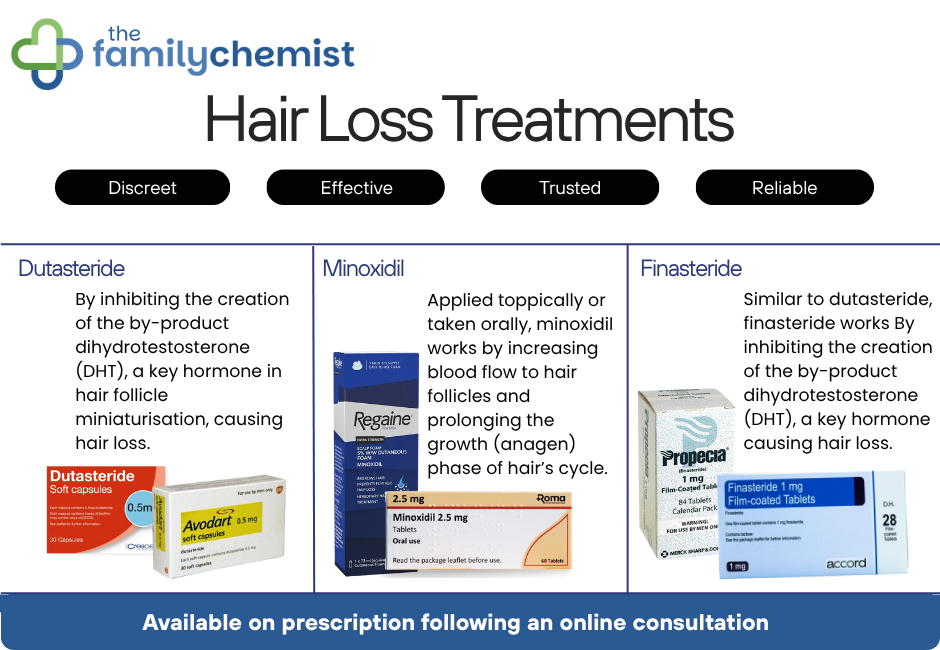
For best results, treatments should be started as early as you notice thinning and loss and be used consistently. Hair loss is progressive, meaning hair loss will continue without treatment. Treatments can help to slow the process and help keep your hair thick and healthy for longer.
The Bottom Line
If you’re starting to notice your hair thinning, seek advice and treatment from The Family Chemist. We understand how hair thinning can affect your confidence and hair pride, and our qualified clinicians can help you get that comfort back. Providing discreet, convenient access to treatment.
Hair thinning can begin at almost any age. Understanding the signs and acting fast can make a meaningful difference in changing that timeline. Helping you maintain thicker, healthier looking hair.