




 Our last order date is Tuesday 31st March. For festive opening times,
 Understanding Eczema: What Causes It and How to Manage Flare-Ups
If you’re someone who lives with eczema or has suffered in the past, you’ll know how irritating and (at times) painful it can be. Eczema is a skin condition that affects millions of people across the UK usually affecting the elbows, knees, and hands. Affecting people of all ages from infants into adulthood, and often causes symptoms such as itching, dryness, and inflamed skin. Eczema is usually a long-term condition which shows flare-ups because of certain triggers. But the good news is that there are treatments and preventative measures available to help manage symptoms.
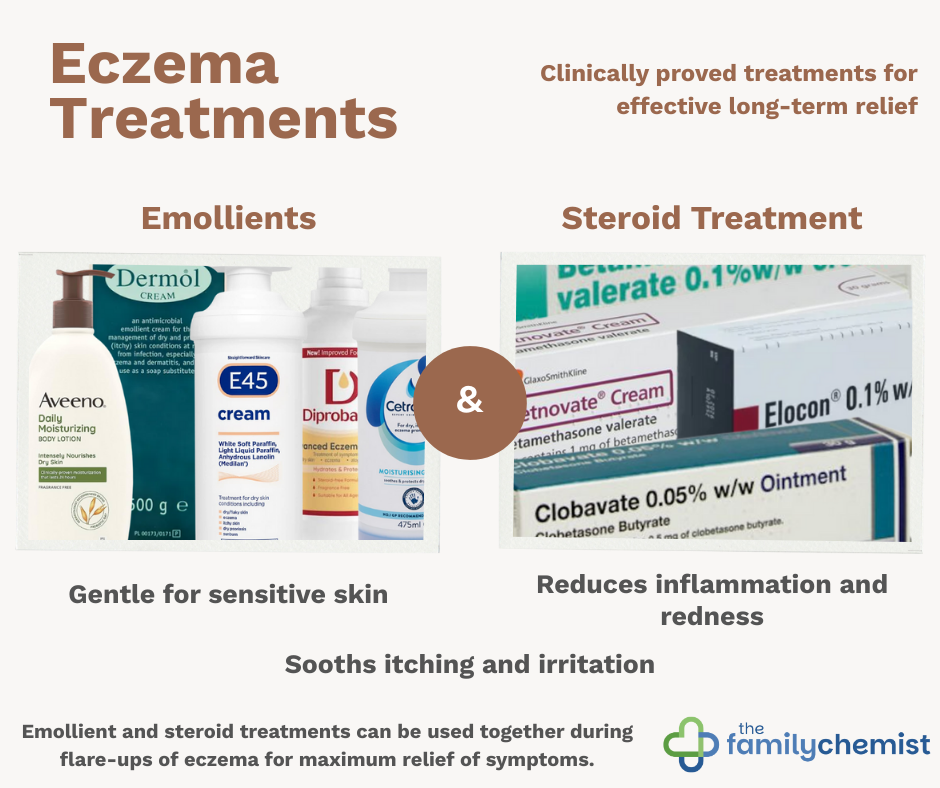
With our recent launch of our range of eczema emollients and steroid creams, we’re here to support you rediscover soothed and softer skin.
What is Eczema?
Eczema is a skin condition which affects how well the skin can hold onto moisture and protect itself against irritation. Those with eczema have drier skin due to this escaped moisture and has a weakened skin barrier which can become inflamed and irritated. Especially when exposed to certain allergens or triggers.
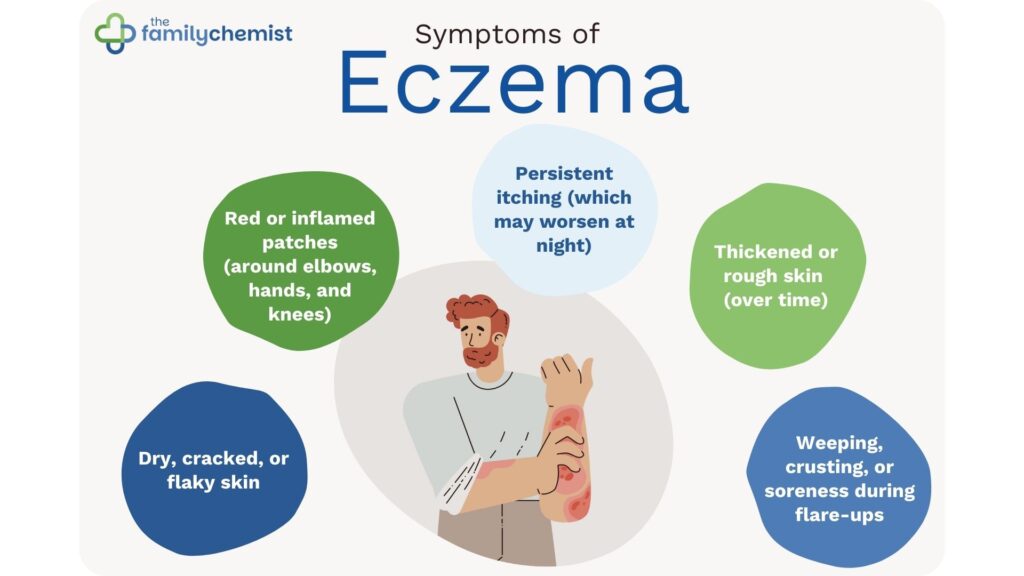
Symptoms of eczema usually come and go, easing and potentially getting worse at different times of year or when exposed to certain triggers. This is known as a ‘flare-up’, when symptoms can be at their worst. Symptoms can vary in severity from one flare-up to the next. So it’s important to keep an eye out for those triggers in order to prevent a harsh flare-up.
What Causes Eczema?
Eczema is caused by a combination of genetics, immune system, and environmental factors which can all play together to cause this weakened skin barrier. It is common that people with eczema may also suffer (or have suffered in the past) from allergies, asthma, or hay fever.
Identifying the triggers which can cause a flare-up of eczema is key in keeping their severity at bay. Reducing irritation, inflammation, and any long-tern symptoms.
What are Some Common Eczema Triggers?
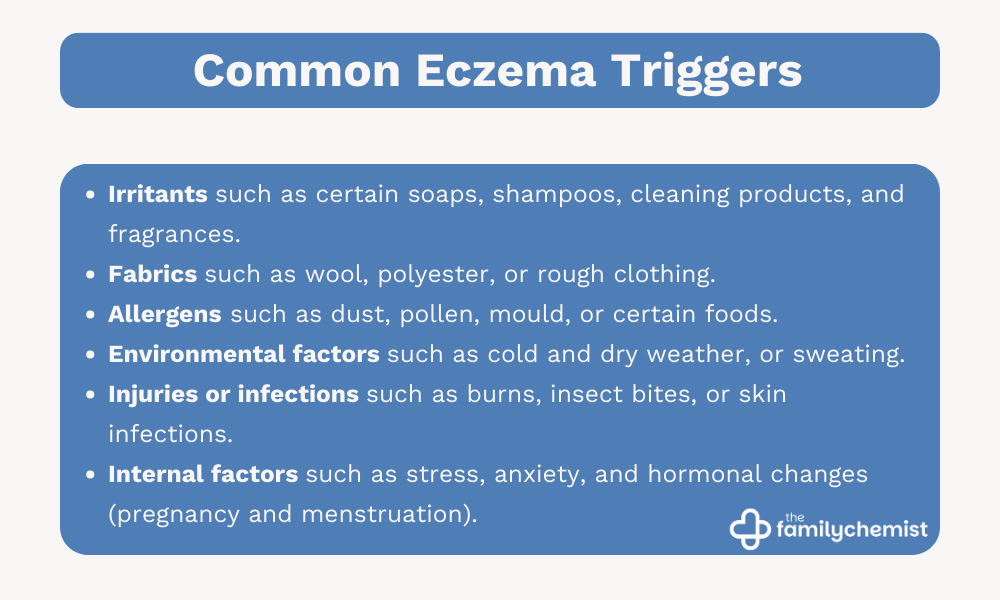
Triggers can differ from one person to the next. So, while one person may find that the weather usually triggers their flare-ups, that might not be the same for another. Finding what works for you personally is important in keeping your skin soft and protected.
How to Manage Eczema Effectively
Unfortunately, there is no cure for eczema yet. However, we advise a consistent skincare routine to maintain that skin barrier, and – if needed – appropriate treatments for flare-ups. Keeping those symptoms under control.
Emollients: The Supportive Foundation
Emollients such as Aveeno and E45 are fantastic options which restore that skin barrier; locking that moisture and keeping skin soothed and hydrated. These act as the basis of eczema skincare and can be used as often as you would like.
Emollients can be used even when symptoms are mild, or even absent. Coming in many varying forms such as bath washes, oil, ointments, or creams there are many options available for you to find the option that works for you.
Regular use of emollients helps to reduce itching, prevents cracking, and lowers the risk of flare-ups.
Steroid Creams: The Flare-Up Option
During flare-ups, steroid creams such as clobetasone or betamethasone can be applied to affected areas in order to calm inflammation, reduce redness, and relieve itching. These treatments can only be prescribed by a healthcare professional and should only be used under their guidance.
Steroid creams should only be used short term (for up to four weeks) and should not be used on any delicate area such as on the face, neck, genitals, or on any broken, infected or severely irritated skin. This is because steroid creams can thin the skin, and prolonged treatment can cause a withdrawal reaction.
When used correctly, steroid creams are an effective option for reducing flare-up symptoms. Bringing relief and control.
Lifestyle Choices: The Underestimated Aid
While avoiding certain triggers such as foods, pollen, and wash soaps which can cause flare-ups; there are other lifestyle changes which can help to reduce the chances of flare-ups. Managing stress and maintaining a regular sleep routine can both help to reduce the risk of flare-ups as high stress and poor sleep can both weaken the immune system; one of the causes of eczema flare-ups.
The Bottom Line
Living with eczema can be irritating and (at times) painful. But, with the right knowledge, treatment options, and routine, it is possible to manage eczema symptoms effectively. By getting familiar with your triggers, using emollients regularly, and treating flare-ups promptly and appropriately, you can keep feeling comfortable in your skin.
Explore our eczema treatment range today and take the next step towards better, soothed skin.