






People researching weight-loss injections usually want one thing first: proof that the treatment actually works. Before committing to a consultation, cost, and lifestyle changes, the most common question is simple: does Mounjaro actually work, and how much weight can you realistically lose?
Search demand reflects this. Queries like “mounjaro weight loss” and “does mounjaro work for weight loss” continue to rise because patients want outcome-focused information before making a decision.
This guide examines the clinical evidence, real-world outcomes, expected timelines, and the factors that determine success. It’s designed to help you understand what results are realistic, who responds best, and how to approach treatment in a safe, sustainable way.
How much weight can I lose on Mounjaro?
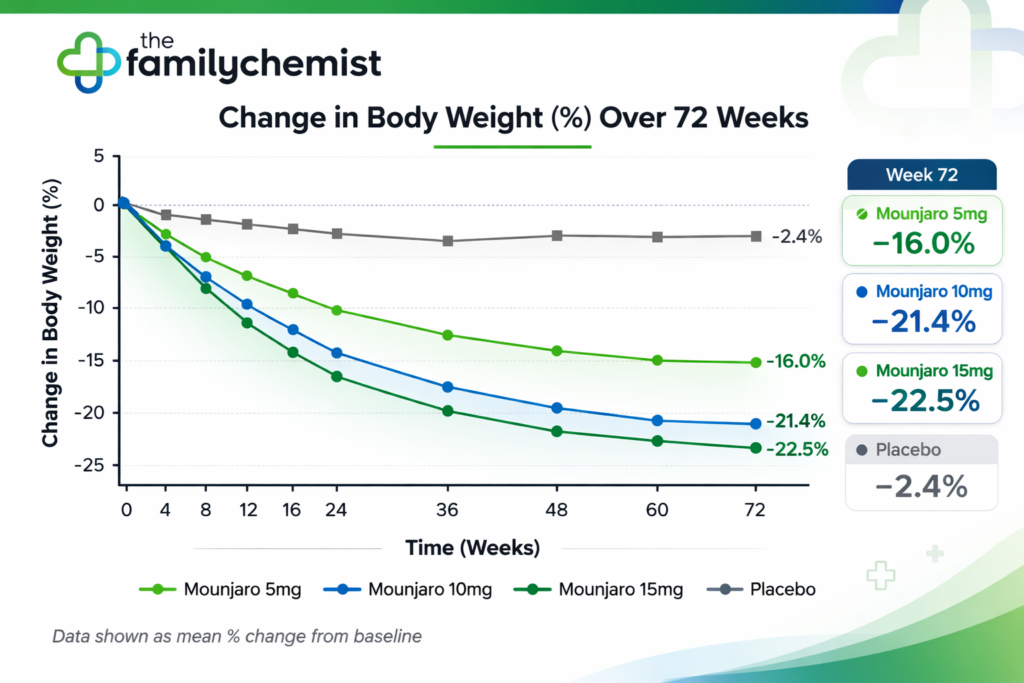
The amount of weight you can lose on Mounjaro varies depending on several factors, including your starting weight, age, sex, lifestyle changes and whether weight comes from diet, exercise or medication. Clinical trials have shown that Mounjaro can lead to significant weight loss. On average, participants in these studies have experienced a reduction of approximately 15-20% of their body weight over 72 weeks.
Individual results may vary, with some people achieving more substantial weight loss and others experiencing less. Factors influencing your weight loss include:
- Initial weight: Those with a higher starting weight may see more pronounced results.
- Lifestyle: Combining Mounjaro with a healthy diet and regular exercise enhances weight loss.
- Adherence: Consistent use of Mounjaro as your clinician prescribes is crucial for achieving the best results.
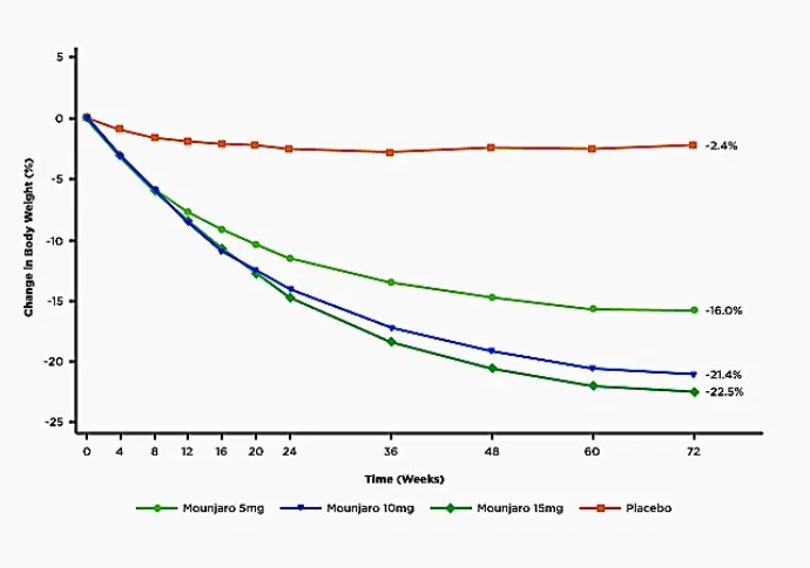
Patients maintenance dose on Mounjaro treatment are 5mg, 10mg or 15mg. We recommend you stay on the lowest effective dose with good diet and exercise plans. In the studies we noticed the following weight loss after using Mounjaro for 72 weeks:
- Average weight loss of 16% of starting body weightwith a 5 mg weekly dose
- Average weight loss of 4% of starting body weightwith a 10 mg weekly dose
- Average weight loss of 5% of starting body weightwith a 15 mg weekly dose
- 4% to 96.3% of participantslost at least 5% of their starting weight, depending on their maintenance dose.
These outcomes are based on clinical study data and show how higher weekly doses may lead to greater weight-loss results when combined with diet and lifestyle changes.
What is a healthy rate of weight loss?
For most adults, a healthy rate of weight loss is about 0.5 to 1 kg (1 to 2 lb) per week. Losing weight at this pace helps you lose fat steadily, keep your energy up, and maintain muscle while still getting the nutrients you need. Most experts agree this is the safest and most sustainable way to lose weight.
Even though slow progress can be frustrating, losing weight gradually is easier to keep off in the long run and lowers the chance of gaining it back. Losing weight quickly often means losing water and muscle along with fat, which can hurt your health and make it harder to keep the weight off. Fast weight loss can also make loose or extra skin more likely.
A week by week guide to loosing weight on Mounjaro
Week 1: Mounjaro Starting Dose
When you start Mounjaro (tirzepatide), the usual starting dose is 2.5mg once a week. This is the same even if you have used Mounjaro before or tried other weight-loss injections. You should not switch straight from a higher dose of another medication, like Wegovy, to a higher dose of Mounjaro. The active ingredients are different, so your body may react differently.
Before your first injection, pick a day and time that you can keep each week. Taking Mounjaro at the same time every week helps keep the medicine level steady in your body, so it works as well as possible during your treatment.
Sticking to a regular schedule also helps your body get used to the medication. Giving your injection on the same day each week may help you tolerate it better and lower the chance of side effects as you continue treatment.
As part of the weight loss program, you’ll get helpful tools like a weight-loss tracker and a food diary from The Family Chemist Clinician. These will help you keep track of your progress, stay on course, and notice changes in your eating habits, weight, and results over time.
What to expect on your first week of Mounjaro?
In your first week on Mounjaro (tirzepatide), weight changes are different for everyone. Some people see a small drop, others notice little change, and a few may lose a bit more. Early results are usually modest as your body gets used to the medication.
If you see a quick drop on the scale, it is often from losing water, not body fat. When you eat fewer calories, your body uses stored carbohydrates (glycogen) for energy. Glycogen holds water, so as these stores go down, you may lose water weight too.
After this first phase, your body will likely start using stored fat for energy. This helps with gradual and steady fat loss in the weeks ahead. Mounjaro is meant for long-term weight management, so expect slow and steady progress over months, not quick results.
Side effects in week 1
You might also notice some mild side effects when you start Mounjaro, but these usually get better over time. These can include:
- nausea or feeling sick
- headache
- diarrhoea
- constipation
- stomach (tummy) pain
- tiredness or low energy
Keeping track of your symptoms and progress can help you see how your body is responding to treatment and support steady, lasting weight loss.
Appetite changes
You might notice less hunger in the first week, but this is different for everyone. Some people feel full sooner, while others need more time or a higher dose to see changes in appetite. The starting dose of 2.5mg is low to help your body adjust slowly.
What to do when you first start Mounjaro?
Support your nutrition
Side effects can change your appetite, so try to eat regular, balanced meals to keep your energy up and get the nutrients you need.
Choose the best time for your injection
If you feel nauseous, taking your weekly injection after a main meal or in the evening might help. You can change your injection day if needed, but try not to switch it too often.
Plan for long-term weight loss
Start building healthy habits now, like eating better, moving more, and setting goals you can reach in the next few months.
Stay well hydrated
Drink plenty of fluids, especially if you have side effects. Try to have about 6 to 8 glasses of water each day, since dehydration can make symptoms worse.
Be patient with results
Week 1 is just the start. Safe, steady weight loss takes time, and the medication needs a few weeks to work fully. Staying consistent and making long-term changes will help you get the best results.
“Think of Mounjaro as the start of a real, lasting change, not a quick fix, but something that works with your body over time. You might notice small wins early on, but the most powerful results build week by week as your appetite settles, your habits shift, and your confidence grows. Everyone’s journey looks different, so don’t worry if it’s not instant. Progress is still happening behind the scenes. The people who see the best results are the ones who stay consistent and trust the process, because this isn’t about rushing weight loss… it’s about creating something that actually lasts.” Sunny Dhain Clinical Director and Pharmacist.
Week 2 of taking Mounjaro: Setting into treatment
In the second week of Mounjaro, most people have a similar experience as in the first week because the starting dose stays at 2.5mg until week five. With your second dose, you might start to notice the effects of Mounjaro more, especially if you are following a steady diet and healthy habits.
In week two, side effects may stay the same or start to get better as your body gets used to the medication. Most common symptoms improve over time. If you have side effects that are severe or hard to handle, you should talk to a healthcare professional.
Weight loss in the second week of Mounjaro is different for everyone and depends on things like metabolism, age, starting weight, diet, and activity level. Studies show that in the first four weeks, most people lose less than 1% of their body weight per week, usually about 0.5 to 1kg, as the body gets used to the treatment and appetite levels out.
Week 3 – 4 of taking Mounjaro: Early Wins
In weeks 3 and 4 of Mounjaro treatment, most patients notice that early side effects start to fade. You will likely stay on the 2.5mg starting dose as your body keeps adjusting to tirzepatide and its impact on appetite and blood sugar.
By week 4, clinical studies show average weight loss is typically under 4% of starting body weight. However, individual results vary. Outcomes depend on factors such as adherence to a reduced-calorie diet, physical activity levels, and how your body responds to the medication.
At this point, tirzepatide levels in your body are becoming steadier, so you may notice Mounjaro’s effects on appetite more clearly. Many people say they feel full longer, have fewer cravings, and are less hungry between meals.
Even if you are less hungry, it’s important to keep eating regular, balanced meals. Skipping meals can lead to nutrition problems and is not a safe or lasting way to lose weight. For long-term success, combine your medication with good nutrition and healthy habits.
Weeks 5 – 8 of taking Mounjaro: Momentum Building
Between weeks 5 and 8, you will have your first increase in Mounjaro dose. At this point, most people start taking 5mg of tirzepatide once a week and continue this dose for at least four weeks. If you are on the usual treatment plan, you will stay at this dose until week 8, and any further increase will be considered after week 9.
Weight loss progress
At this stage, many people taking Mounjaro for weight loss start to notice more steady changes. Clinical studies show that people lose about 5% to 6% of their starting weight during the early weeks of treatment. Try not to focus only on the scale, since your weight can change from day to day. Weigh yourself every 2 to 4 weeks, notice how your clothes fit, and measure your waist to get a better sense of your progress.
Possible side effects after the dose increase
When you start a higher dose of tirzepatide, you might have some temporary side effects as your body gets used to it. These are usually mild and do not last long. Common side effects include nausea, constipation, diarrhoea, or stomach discomfort. Most people find that these symptoms go away within a few days or weeks.
If your side effects are strong or last a long time, The Family Chemist clinician might suggest staying on the 2.5mg dose for a bit longer before increasing it. If you still have symptoms for several weeks, even at the lowest dose, your treatment plan may need to be reviewed, especially if these symptoms affect your daily life.
How Mounjaro works at this stage
As your dose goes up, you might notice that you have better control over your appetite and feel fuller after eating. This can help you stick to a lower-calorie diet and develop steady, lasting weight loss.
After a month of treatment, many people say they have more energy and feel better overall, especially when they combine Mounjaro with healthy eating and regular exercise. Keep following your meal plan and exercise routine, and pay attention to how your body responds to the 5mg dose over the next four weeks.
Weeks 9 – 12 of taking Mounjaro: Confidence Growing
Starting in week 9, many patients switch to taking Mounjaro 7.5mg (tirzepatide) once a week as part of their plan to gradually increase the dose. This helps keep up progress with weight management and blood sugar control, and also helps manage appetite.
Expected weight loss
Between weeks 9 and 12, people taking Mounjaro for weight loss may lose about 9% to 12% of their starting weight.However, results can be different for everyone, depending on the dose, diet, activity, and how each person responds.
Possible side effects after increasing to 7.5mg
When you increase your Mounjaro dose, you might notice some side effects as your body gets used to the change. These can include nausea, stomach upset, constipation, diarrhoea, or acid reflux. Not everyone will have these symptoms, and they usually go away after a while.
To manage symptoms during this stage:
- Eat smaller, simple meals if you feel nauseous
- Consider pharmacy medicines for short-term relief of diarrhoea, constipation, or reflux
- Stay hydrated and allow time to rest while your body adapts
Staying on a lower dose
You do not need to increase your dose if you are happy with your results on 5mg. Many people stay on a lower dose if it works well and is easier to handle. Talk to your healthcare provider before making any changes, especially if you have side effects. You can adjust your dose later if needed.
How the medication may feel at this stage
At 7.5mg, you might find that your appetite is more reduced, you feel full faster, and you are less hungry between meals. This is a normal effect of tirzepatide and helps support weight loss when you also make healthy lifestyle changes.
Weeks 13+ on Mounjaro: A New Baseline
By week 13, you may be able to move up to a 10mg weekly dose. This depends on how well you’re handling the medication and how your weight loss is going.
Expected weight loss results:
Studies show that by week 13, many people lose about 13% of their starting weight. Everyone’s results are different, though. If you’re losing weight steadily, your treatment and lifestyle changes are working, even if your progress is slower than average.
Possible side effects after a dose increase:
Raising your dose can make temporary side effects more likely as your body gets used to the change. Be ready to manage common symptoms at home, and reach out for advice if you have any concerns.
How the higher dose supports appetite control:
A 10mg dose may help reduce your appetite more if lower doses haven’t fully curbed your hunger. It’s normal to still feel some appetite while taking Mounjaro, but many people find it easier to manage portion sizes and eat fewer calories than before treatment.
Snacking, cravings, and behaviour change:
If you still crave sugary or high-fat foods, it’s often because of habits and cravings, not real hunger. Talking with a clinician, nutritionist, or behavioural support professional can help if you eat to manage stress or have trouble breaking snacking habits.
Nutrition support while taking Mounjaro:
If you need help with what to eat, look at a Mounjaro diet guide. These guides explains how to make balanced meals, which foods and drinks to limit, and what to eat if you have side effects like nausea or less appetite.
Tips for Successful Weight Loss on Mounjaro: What Actually Makes the Difference
Creating a calorie deficit that supports steady weight loss
Weight loss depends on achieving a calorie deficit. For most adults, this means consuming about 600 fewer calories per day than needed to maintain current weight, though individual needs vary by age, sex, activity, and metabolism.
Mounjaro often makes this easier because it reduces hunger and helps you feel satisfied with smaller portions. Many patients naturally begin eating less without needing strict dieting rules.
If reducing intake is difficult at first, gradual changes are longer lasting. Tracking food with a calorie-counting app can build awareness. Small reductions, like cutting 100 calories at a time, are easier to maintain than sudden restriction. The aim is not to eat as little as possible, but to find a consistent and realistic balance that the body can sustain long term.
Focusing on the right foods rather than just eating less
When Mounjaro lowers your appetite, it is even more important to choose healthy foods. Eating too little or picking foods with few nutrients can make you tired, cause muscle loss, and slow down your progress.
Meals with lean protein, vegetables, whole grains, and some healthy fats help with weight loss and keep you healthy. These foods help you feel full longer, keep your energy steady, and protect your muscles as you lose fat.
Processed foods, sugary foods, and meals high in saturated fat can slow your progress and make you crave more, even if you are less hungry. Rather than cutting out everything at once, try slowly choosing more whole, simple foods while still allowing yourself some flexibility.
This approach is far significantly more maintainable than rigid dieting.
Movement supports fat loss and protects metabolism
Being active is important along with taking the medication. While Mounjaro helps you eat less, moving your body helps you use energy better and keep your muscles strong.
The NHS suggests getting regular activity each week, like about 150 minutes of moderate exercise, for example, brisk walking, or shorter sessions of more intense activity. Still, being consistent is more important than how hard you exercise.
Moving every day, even just a little, helps you build good habits. Walking more, taking the stairs, or doing some light strength exercises can boost your metabolism and make the treatment work better.
Strength exercises are especially helpful. Keeping your muscles strong helps prevent your metabolism from slowing down and makes it easier to keep the weight off in the long run.
Sleep quality has a direct impact on weight loss
People often forget about sleep when trying to lose weight, but it is very important for controlling hunger, having enough energy, and staying motivated.
Not getting enough sleep can make you crave more food, move less, and find it harder to make healthy choices. Changes in your hormones from lack of sleep can also affect hunger and how your body stores fat.
Better sleep habits can make losing weight easier. Try to go to bed and wake up at the same times, keep your room dark and comfortable, and avoid screens before bed to help you sleep better.
When you sleep better, you usually have more energy. This makes it easier to stay active, eat healthy, and stick with your treatment.
Managing stress to avoid setbacks
Stress affects weight loss in subtle but powerful ways. It can increase cravings, encourage emotional eating, and contribute to fat storage around the abdomen. It can also reduce motivation for movement and disrupt sleep patterns.
You do not need to make big changes to handle stress. Simple things like walking, practicing mindfulness, stretching, or regular exercise can help you manage stress and feel better overall.
When you manage stress, it is easier to make good choices and keep up with healthy habits for weight loss.
Giving Mounjaro enough time to work
One of the most important, but often misunderstood, parts of successful treatment is giving it enough time.
Weight loss with Mounjaro happens gradually. Studies show that the biggest changes often take months of steady treatment. Some of the best results come after a year or more, once your dose is set and you have made healthy changes to your routine.
In the first few weeks, you will likely notice changes in your appetite more than big drops in weight. Adjusting your dose, staying consistent, and making healthy changes all help you make progress over time.
If your weight loss seems slow, it does not always mean the treatment is not working. Your body might still be adjusting, your dose may need to be changed, or you might need to fine-tune your habits.
