





 Our last order date is Tuesday 31st March. For festive opening times,
As we head into the warmer weather (believe me, it is coming), when sneezing, runny noses, and congestion occur it can be difficult to know whether you have a cold or hay fever. The symptoms overlapping and the season feeling a bit ‘in-between’. But these two conditions have very different causes, and often very different treatments too.
Understanding the difference between a head cold or hay fever can help you pinpoint what exactly is causing the sniffles and choose the right treatments.
What is a Summer Cold?
Easily put, a summer cold is simply a common cold which occurs during the warmer months. It’s caused by a viral infection which affects the upper respiratory tract (the sinuses, and the throat) and is easily spread from one person to the next through coughs, sneezes, or contact with surfaces which are contaminated. Despite the name, a ‘cold’ can happen at any time of the year, even when it might be a lovely warm day. During the warmer months, often the symptoms of a cold can be mistaken for hay fever because of the association of colds with the winter season, and because common symptoms can overlap.
One way to tell if it’s hay fever or a cold is that colds develop gradually after exposure to a virus and usually clear up on its own within 7 to 10 days. Hay fever on the other hand is an allergy and can persist for weeks (or months), for as long as the pollen count is high.
Symptoms of a Summer Cold
Cold symptoms usually appear gradually as the virus multiplies in the body.
Common cold symptoms include:
- Sneezing
- Runny or blocked nose
- Sore throat
- Cough
- Mild fever
- Headache
- Body aches
- Fatigue or feeling generally unwell
You might notice with a cold that nasal mucus (icky snot) is thicker or yellowy-green. You’ll probably also notice that symptoms will get worse until they peak at the couple day mark and then improve again as your immune system fights the infection.
What is Hay Fever?
Hay fever, also known as allergic rhinitis, is an allergic reaction that happens when the body slightly overreacts to allergens such as pollen. The body mistakenly treats pollen as a threat and releases a chemical called histamine to try and fight the invader, leading to those familiar symptoms.
In the UK, hay fever usually strikes from late March to September, especially when the weather is warm, humid, and windy.
Unlike a cold, hay fever is not contagious. So, you can’t catch it from someone who is already suffering. Symptoms of hay fever tend to appear quickly after exposure to pollen and usually persist for weeks (or months).
Symptoms of Hay Fever
Hay fever symptoms can often resemble those of a cold, but there are some differences.
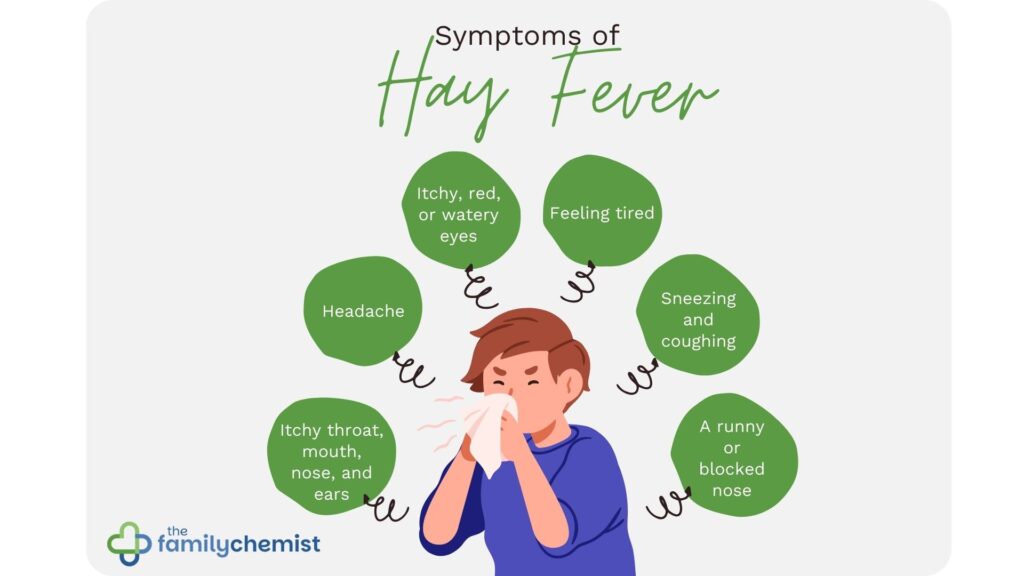
One of the biggest clues to hay fever over a cold is the itchiness, particularly around the eyes, nose, or throat. This doesn’t tend to occur with a cold.
Hay fever also doesn’t usually cause any fever, or general aches and pains, which are usual for viral infections.
Another key tell is that with hay fever your symptoms likely worsen when you are outdoors or when the pollen counts are high.
Remedies for Cold and Flu
Because of the nature of a cold, there is no cure. The body is usually able to fight the viral infection on its own with time. However, there are several medicines which can offer relief to the symptoms while your body fights the infection.
Pain relief medication – Over the counter painkiller such as paracetamol or ibuprofen can help to relieve symptoms such as headache, fever, and body aches.
Decongestants or nasal sprays – Helping to reduce congestion relieving pressure and helping you breathe easier.
Throat soothers – Lozenges or throat sprays can help to ease sore throats and dry coughs.
Rest and hydration – The unsung hero of recovery. Getting plenty of rest and drinking fluids helps your immune system do what it does best; recover.
Most people tend to recover from colds within a week or two, though it may leave you feeling tired for a little longer while the body bounces back. If symptoms are lasting longer, then it’s worth speaking to a healthcare professional.
Remedies for Hay Fever
Managing hay fever usually involves either reducing the exposure to pollen, or by reducing the histamine which is released to combat pollen.
Antihistamines – Available in many forms, antihistamines work by blocking the release of that symptom-causing chemical; histamine.
Steroid nasal sprays – These steroid sprays work by reducing inflammation in the nose, helping to east irritation caused by pollen.
Eye drops – Anti-allergy eye drops can relieve redness, irritation, and watery eyes. Usually containing an antihistamine which prevents pollen affecting the eyes in the first place.
Reducing pollen exposure – While you can’t always avoid pollen, there are a few simple steps you can take to reduce your exposure while still enjoying the warmer weather such as:
- Wear sunglasses to protect your eyes from pollen
- Dust your home regularly with a damp cloth to remove pollen from surfaces
- Apply a thin layer of Vaseline around your nostrils to trap pollen before it enters your nose
- Keep windows and doors shut to keep pollen out
- Avoid smoking, as it can worsen symptoms
- Keep an eye on the pollen forecast and plan your outdoor activity for low-pollen days
- Avoid gardening and mowing the lawn which can stir up pollen
You May be Interested In
As the season progresses into warmer months, you may be asking ‘Do I have a cold or hay fever’ and trying to determine the difference between the two. The key differences between hay fever and a cold are:
- Cause, either viral infection or allergic reaction
- How quickly symptoms begin, either developing gradually over a few days, or appearing quickly after exposure to pollen
- Duration of symptoms which last typically either 7 to 10 days with a cold, or over several weeks or months with hay fever
- Itching, especially in the nose, eyes, and throat which occur with hay fever but are rare with a cold
- Fever and aching, which are likely with a common cold but do not usually appear with hay fever
- Contagiousness, as colds are spread from one person to the next, while hay fever is an allergy and cannot be passed along.
Whether you’re suffering from symptoms caused by cold or hay fever, the right treatment can make a big difference.
Explore our range of treatment options for allergies and hay fever, and cold and flu with The Family Chemist. You may wish to explore our Pharmacy Shop range of over-the-counter allergy and hay fever, and cold and flu treatment options.

Or for prescription only treatments without the GP appointment and the long queues, try our Online Clinic for allergy and hay fever treatments.