




 Our last order date 19 December 2025.
  Fibre: The Forgotten Nutrient
In the past few years’ protein became the main food buzz word causing widespread obsession. However, the percentage of individuals in the UK at risk of not meeting the minimum protein requirements is miniscule. On average, men in the UK consume around 85g of protein and women around 67g per day, both exceeding the recommended intake of 56g and 45g, respectively (based on 75kg bodyweight for men and 60kg bodyweight for women). Instead of protein, fibre should have been placed on centre stage.
Why fibre matters
Our gut is the gateway to our body and the bacteria in our gut, the gut microbiome, influences multiple aspects of our health from metabolism to bone health and immune function to cognition. The food we eat influences the diversity of bacteria in our gut microbiome. The more food that feeds the ‘good’ bacteria the better. There are many beneficial and fibre is one of the best nutrients for our gut microbiome and overall health. Fibre can strengthen the immune system, support gut health, reduce inflammation and risk for heart disease, stroke, hypertension, obesity, Type 2 diabetes, and several cancers, including colon and breast cancer.
Fibre is a type of carbohydrate serving as a prebiotic that promotes gut health and a healthy microbiome. When the gut microbiome consumes fibre in the large intestines, it releases short chain fatty acids to improve colon health. Unlike other nutrients that are broken down at some point along the digestive tract, fibre passes through our body promoting healthy bowel movements and keeping us regular. The two types of fibre are: soluble and insoluble, most plant-based foods contain both types. The outer layer containing insoluble fibre and the inside soluble fibre.
Types of fibre
Soluble fibre dissolves in water or a fluid, creating a viscous gel-like substance that can reduce digestion time. A fast digestion can spike blood sugar whereas a slower digestion rate reduces. This lowers overall blood cholesterol and helps with fullness.
Insoluble fibre, also known as roughage, is contained in the outer layer and structure of fruits and vegetables. Unlike soluble, insoluble fibre draws water into stool, making it soft and easier to progress through the digestive tract. This type requires longer to chew and break down, resulting in slower digestion and portion control.
Additional health benefits
One of the soluble fibres, beta-glucan, has been shown to reduce the amount of circulating cholesterol and lower the risk of atherosclerosis (hardening of the arteries) and high blood pressure.
The same soluble fibre, beta-glucan, has the superpower to reduce digestion time and slow the absorption rate of sugar into the blood stream. Therefore reducing the risk for type 2 diabetes.
One of the short chain fatty acids, butyric acid, produced within the gut microbiome has the ability to suppress inflammatory responses. This effect has been shown to decrease the risk of chronic disease development of multiple cancers.
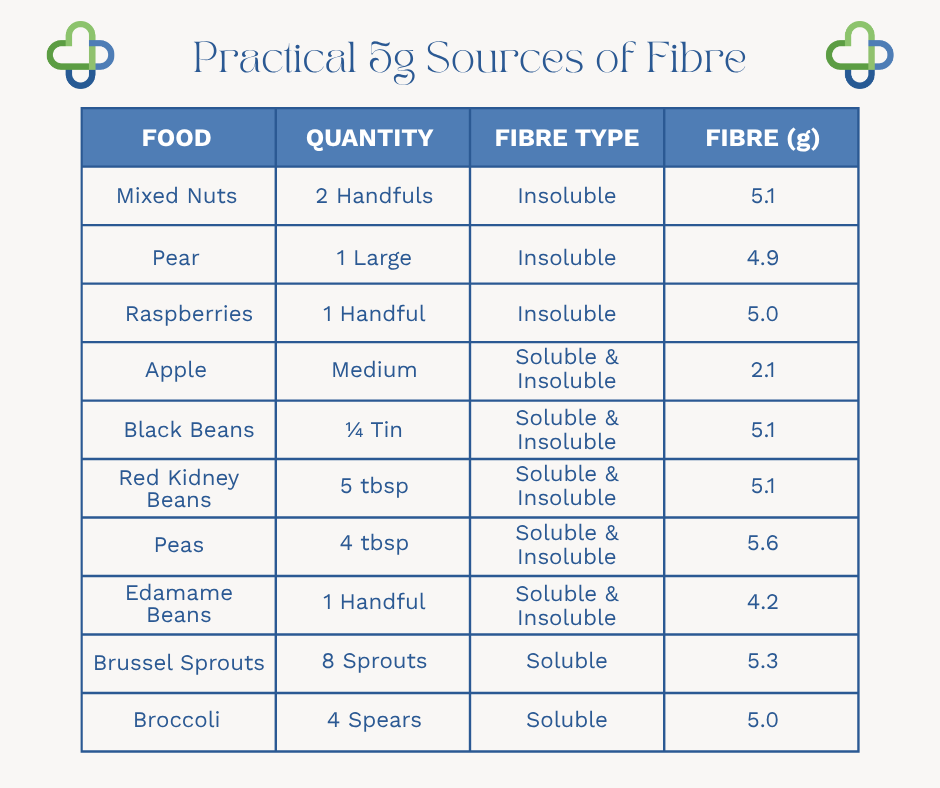
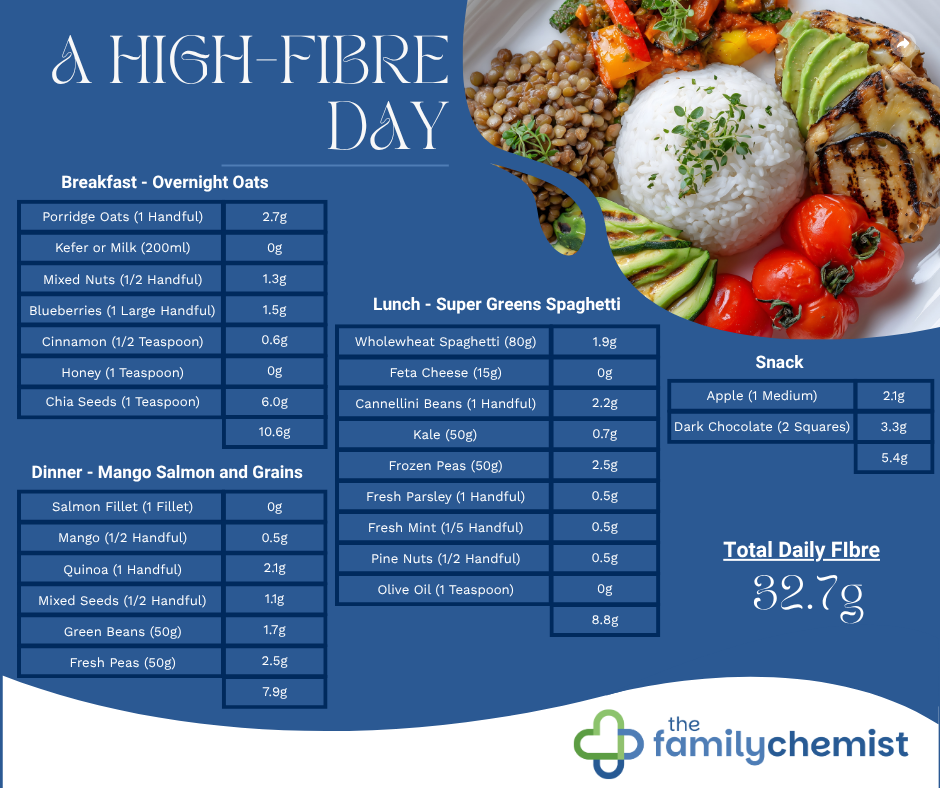
Below are a few tips to increase your fibre intake through a 5g cheat sheet and an example ~30g day.