





Testosterone and Acne: How Hormones Play a Role & What You Can Do
Acne is far more than just a teenage problem; it affects people of all ages and can have a significant impact on confidence and mental health. In fact, around 95% of people aged 11 to 30 in the UK will experience some form of acne, and for many, it doesn’t stop there. Adult acne is increasingly common, especially among women in their 20s, 30s, and beyond.
One of the lesser‑understood causes of acne is hormonal imbalance, and in particular, the role of testosterone and other androgens. These hormones can trigger an increase in oil production in the skin, leading to clogged pores, inflammation, and breakouts. Whether it’s teenage puberty, menstrual cycles, polycystic ovary syndrome (PCOS), or even certain medications, hormonal fluctuations can be a key factor in persistent or hard-to-treat acne.
The Hormonal Connection
Testosterone is an androgen; male hormones that both males and females have. It can cause acne by stimulating glands in the skin to produce sebum (an oily substance). In healthy skin, sebum helps to protect moisture barrier and keeps skin supple. But excessive sebum, together with dead skin cells, can clog hair follicles. This, in turn, creates an environment where bacteria can buildup, triggering inflammation and forming acne spots (such as blackheads, whiteheads, papules, pustules).
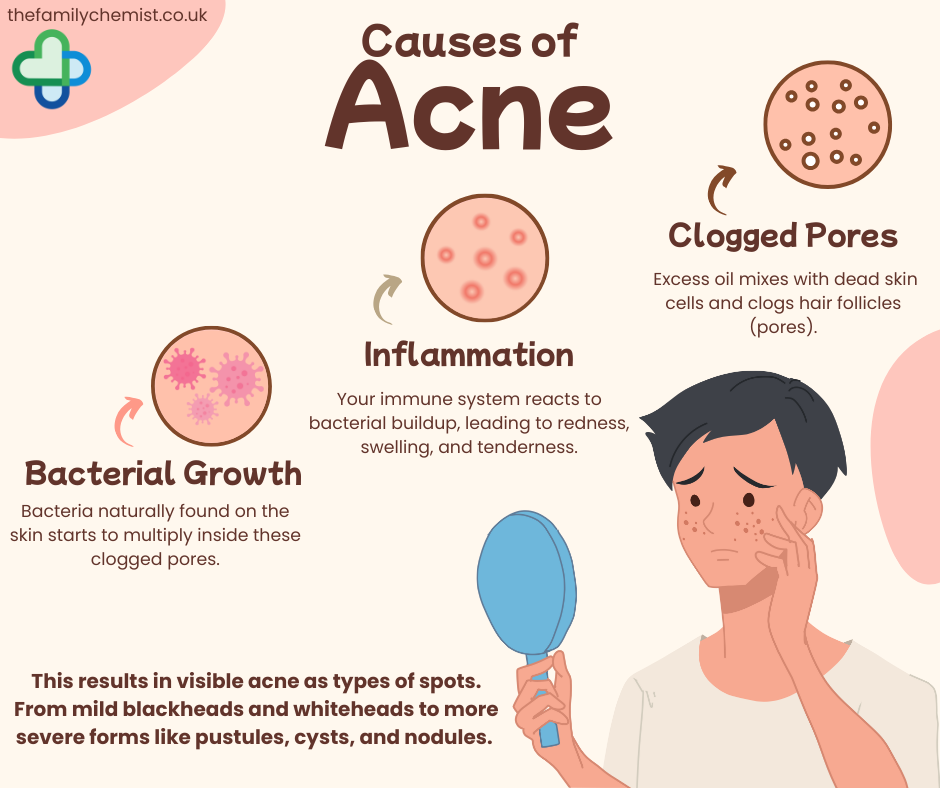
In women, fluctuations in testosterone (for example, during the menstrual cycle, with polycystic ovary syndrome (PCOS), or with other hormonal changes) can trigger acne flare‑ups.
In men, naturally higher testosterone levels and naturally oilier skin can lead to more severe acne. Some medical treatments or supplements that boost testosterone production can also make acne worse as a side effect.
Managing Acne When Hormones Are Involved
Because testosterone (and other hormones) are part of the cause, just using a cleanser may not be enough.
Helpful Tips and Tricks to Manage Acne
There are ways to help you manage your breakouts alongside treatments with some lifestyle tricks to keep your skin clearer. Here are some things that might be worth remembering:
- Keeping your routine consistent with a gentle cleansing. Avoid harsh scrubbing.
- Be patient with treatments. Most treatments take around 6 to 8 weeks to show visible improvement. And while patches may seem like they’re getting worse; this is part of the process.
- Keep track of flare-ups. If your acne gets worse during periods of hormonal change (for example, around your period, or due to PCOS), speak to your GP or a dermatologist.
- Diet, smoking, stress, and sleep can all play supporting roles in acne flare ups. While not the primary cause, factors such as high sugar intake, poor sleep, and chronic stress may exacerbate acne.
The Bottom Line
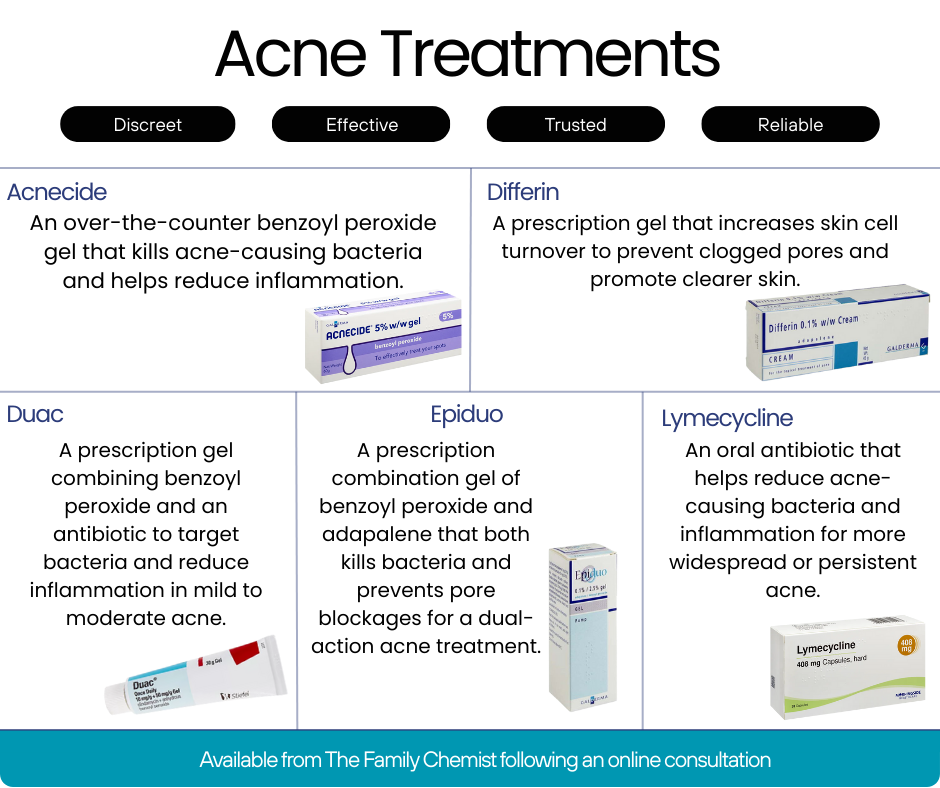
Testosterone is a natural hormone that contributes to sebum production. When sebum, dead skin, bacteria and inflammation come together, acne can occur. Treating acne driven by hormonal factors often requires a combined approach: good skincare, treatments like benzoyl peroxide as first line, and, where needed, prescription treatments.
At The Family Chemist, we offer a range of acne treatments to find a treatment plan that fits your acne severity. If you’re unsure which route is right for you, starting with a consultation is a helpful first step.